


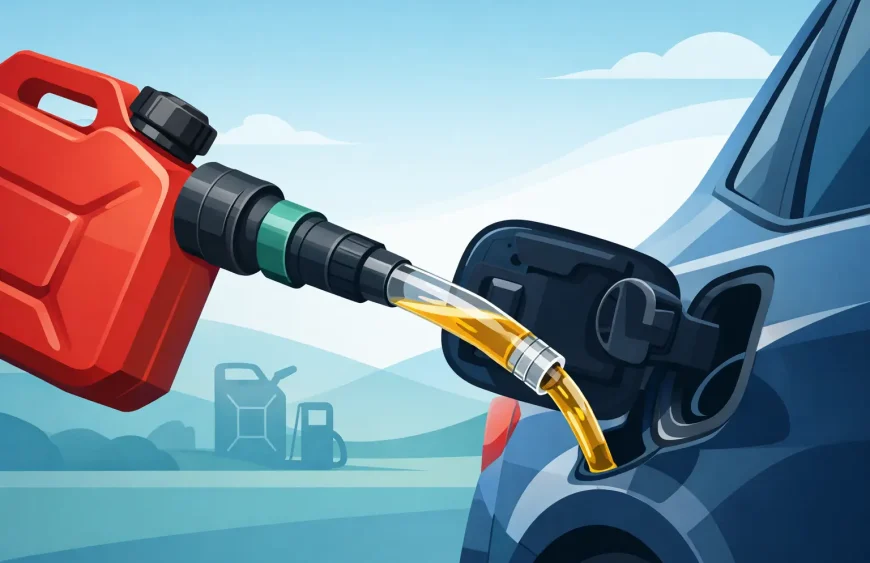
A jerry can is useful right up until the moment you need to pour from it. A heavy container, a narrow filler neck, a gust of wind and a short, rigid spout can turn a simple refill into fuel on your boots, paintwork or driveway. A portable fuel pouring attachment gives the container a controlled outlet, helping you put fuel where it belongs rather than mopping it up afterwards.
For van users, mechanics, smallholders, gardeners and anyone keeping machinery running away from a forecourt, this is not a cosmetic extra. It is a practical fix for a task that wastes fuel, time and patience when the wrong fitting is used.
What a portable fuel pouring attachment actually does
A pouring attachment connects to a portable fuel container and guides the fuel into the receiving tank. The basic job sounds simple, but the details decide whether it works properly. Length, flexibility, outlet shape, thread fit and material compatibility all affect how cleanly a container pours.
A well-chosen attachment lets you reach recessed or awkward filler positions without having to hold a full can at an uncomfortable angle. It also gives you more control over the flow as the tank approaches full. That matters when topping up a mower, generator, boat, quad bike, tractor or heater where the filler neck may be tucked behind guards, bodywork or handles.
The aim is not to make fuel transfer complicated. It is to remove the fiddling, splashing and improvised funnels that make an ordinary job unnecessarily messy.
Why standard spouts so often cause trouble
Many portable cans are supplied with short spouts that are adequate on paper but frustrating in use. They may not reach past a recessed filler flap. They may sit at the wrong angle, or pour too quickly when the can is tipped. Some are too stiff to position neatly, while others are a poor match for the cap thread or sealing arrangement on older containers.
The problem becomes more obvious when the container is nearly full and therefore at its heaviest. You are trying to support the weight, aim the outlet and judge the fill level at once. If the spout is too short or has no useful bend, the fuel can hit the rim of the filler neck and run down the outside of the tank.
That is wasted fuel, but it is also a nuisance on machines, vehicles and workshop floors. Petrol vapour and spills need prompt attention, while diesel residue attracts dirt and leaves a smell that follows you into the van. A purpose-made attachment gives you a more predictable route from can to tank.
Choosing the right portable fuel pouring attachment
The right attachment depends on the fuel container and the equipment being filled. There is no single fitting that suits every can, cap thread and filler neck. Buying by appearance alone is how people end up adapting parts that were never meant to work together.
Start with the container connection. Check the diameter, thread pattern and sealing face of the can rather than assuming two similar-looking caps will interchange. A secure fit is essential: a loose thread or poor seal can leak at the very point meant to make pouring cleaner.
Then consider the receiving end. A narrow outlet is useful for small filler openings and controlled top-ups, but it can slow a larger transfer. A wider outlet may move fuel more quickly, yet it needs a suitable filler neck and more care near full. For most hands-on jobs, control is worth more than outright speed.
Flexible sections are particularly useful where access is awkward. They allow the outlet to be guided around bodywork and into a recessed opening while the can remains in a stable position. The trade-off is that flexible hose must be properly supported and made from material suitable for the fuel being handled. A random length of household tubing is not a fuel solution.
Before choosing, confirm these four practical points:
- The attachment matches the container neck, thread and seal.
- Its materials are compatible with the fuel you use, including biodiesel where relevant.
- The outlet diameter suits the filler neck on your equipment.
- The length and shape allow a comfortable, controlled pouring angle.
TMI Shop designs specialist fluid-handling fittings around these real workshop frustrations: the container that will not reach, the filler neck you cannot see and the spill that should never have happened.
Petrol, diesel and biodiesel compatibility
Fuel compatibility is not a minor detail. Different fuels can affect plastics, seals and hoses differently over time. Petrol in particular requires components designed to withstand it, while biodiesel can be demanding on materials that cope perfectly well with conventional diesel.
If you use more than one fuel, avoid relying on an attachment of uncertain history. Mark containers clearly and keep dedicated fittings with them where possible. Cross-contamination can create problems for engines and heating equipment, and it is easily avoided with a little organisation.
A fitting described as suitable for diesel should not automatically be assumed suitable for petrol or biodiesel. Check the intended use before filling a can or transferring fuel. The correct material specification is part of the tool, not an optional extra.
Cleaner pouring starts with better handling
Even the best spout works badly if the can is balanced on a wing, a tyre or an uneven patch of ground. Put the receiving equipment on stable ground where possible, remove the cap carefully and make sure the attachment is fully seated before lifting the container.
Keep the outlet inside the filler neck rather than hovering over it. Start the flow gradually, especially with a full can, and pause before the tank is completely full. A little air space is better than a last-second surge of fuel back out of the opening.
For awkward fills, it can help to support the can from underneath rather than gripping only the handle. This reduces strain and gives you more control over the tilt. If a container is too heavy to manage cleanly, use a smaller can or choose a transfer method designed for the volume involved. There is no prize for wrestling 20 litres one-handed.
After pouring, let the attachment drain into the filler neck for a moment before removing it. Wipe any drips from the outside of the spout and refit caps securely. A small routine like this keeps fuel odours out of your vehicle and stops residue collecting dust in the workshop.
When an attachment is better than a funnel
A funnel can be useful for a one-off job, but it does not solve the central problem of holding and aiming a heavy container. It introduces another item to steady, clean and store. Unless it seals closely to the filler neck, it can also splash when the flow is fast.
A portable attachment is usually the better choice when you regularly fill the same types of equipment. It stays with the can, follows the container’s movement and can be selected to suit the opening you are working with. That means fewer loose parts and less improvisation at the point of use.
A funnel may still make sense for unusual containers, very small openings or occasional decanting tasks. The practical answer depends on the job. But for regular fuel handling, a correctly fitted spout is generally quicker, tidier and easier to control.
Storage and basic safety matter too
Fuel transfer should be done outdoors or in a well-ventilated area, away from ignition sources. Keep containers upright, closed when not in use and stored in accordance with the fuel container manufacturer’s guidance. Never use damaged cans, split hoses or hardened seals simply because they are still just about usable.
Inspect the attachment occasionally, particularly around threads, joins and flexible sections. Look for cracking, swelling, discolouration or a cap that no longer seals positively. Replacing a tired fitting costs far less than dealing with a spill in a van, shed or workshop.
Keep the attachment clean and protected when stored. A dirty outlet can carry grit into a fuel tank, while an exposed hose can be crushed beneath other kit. A simple holder or dedicated storage spot makes it far more likely that the right fitting is to hand when you need it.
The best portable fuel pouring attachment is the one that fits your container, suits your fuel and reaches the filler without drama. Set that up before the next refill, and a job that used to require luck, spare rags and careful balancing becomes a clean, controlled part of getting on with the work.


