A five-litre spill on the workshop floor is not just annoying. It wastes fuel, creates a slip hazard, leaves a lingering smell and turns a simple top-up into a clean-up job. The right biodiesel accessories deal with the small frustrations that cause those messes in the first place: awkward container necks, poor-fitting caps, slow pouring, splashing and debris finding its way into stored fuel.
For anyone handling biodiesel at home, on a smallholding or in a working workshop, the useful question is not simply, “Will it fit?” It is whether the fitting, spout or filter makes the job cleaner, quicker and less likely to go wrong. Purpose-built accessories earn their space by doing exactly that.
Why biodiesel needs the right fittings
Biodiesel is often handled in containers, drums, tanks and jerry cans that were not designed as a complete system. A cap may technically screw on, but the pour can still glug, splash or run down the outside of the neck. A generic hose may feel fine initially, yet become unsuitable if its material does not cope well with the blend being used.
Material compatibility comes first. Biodiesel can affect some rubbers, plastics and seal materials over time, particularly where a fitting remains in contact with fuel. The correct choice depends on whether you use neat biodiesel, commonly described as B100, or a lower blend, how long the fuel sits in the equipment, and whether it is exposed to heat or sunlight. Check the manufacturer’s stated compatibility rather than assuming that any fuel accessory will do.
There is a practical trade-off here. A cheap universal part may work for a quick, occasional transfer, but it can create false economy if it weeps, hardens, swells or has to be replaced prematurely. A well-made biodiesel-compatible fitting costs more for a reason: it is designed around the fluid, the connection and the repeated handling that ordinary use demands.
Biodiesel accessories for cleaner transfer
The most useful accessories are usually the least glamorous. A good fuel spout, secure cap and correctly sized adaptor can save more time than a complicated pumping arrangement if most jobs involve moving fuel from one container to another.
Spouts that control the flow
A long, properly shaped spout gives the user control at the point where it matters – inside the receiving tank. It helps reach recessed filler openings and reduces the need to hold a heavy container at an awkward angle. That is particularly useful with machinery, generators, boats, heaters and vehicles where filler necks are surrounded by bodywork or guards.
Look for a spout that fits its intended container securely and has enough length to keep the outlet steady. A loose push-on arrangement can allow air in around the joint, causing surging and splashing. A well-matched threaded connection is usually the tidier option where the container supports it.
Flow behaviour matters too. When a container has no proper air return, fuel may pour in bursts as air fights its way back inside. A vented design or a set-up that allows controlled airflow can make pouring noticeably smoother. It is a small detail until you have tried to fill a narrow neck in poor light with fuel running down your gloves.
Caps, adaptors and seals
A cap is not merely a lid. It keeps dirt and moisture out during storage, prevents drips in transit and protects the threads that keep the system sealed. If you regularly swap a spout between containers, having dedicated caps for each vessel avoids leaving an open neck while you search for the right piece.
Adaptors are equally useful when the thread on the container does not match the accessory you want to use. The key is precision. Thread size, pitch and sealing face all matter, so avoid forcing a near match. A cross-threaded container neck is a very expensive way to save a few minutes.
Seals deserve the same attention as the fitting itself. A hard, flattened or cracked seal can turn a decent cap into a dribble point. Check seals during routine handling, especially on containers carried in vans, trailers or machinery lockers where vibration works on every joint.
Filtration starts before the fuel reaches the engine
Stored fuel does not need much contamination to become a problem. Dust from a shed, flakes from a tired container, fibres from a rag or water introduced by poor storage can all cause trouble further down the line. A filter is not a licence to be careless, but it is sensible protection at the point of transfer.
Mesh filters are particularly useful when filling from drums, IBCs or containers that may have been opened repeatedly. They catch larger debris before it enters the receiving vessel. For workshop users, this can prevent a simple filling job from sending visible contamination into a tank where it is much harder to deal with.
Choose the filtration level for the job. Coarse mesh is good for stopping leaves, rust flakes and obvious debris during bulk transfer. Finer filtration may be needed for fuel intended for an engine, but overly fine mesh can make gravity-fed pouring painfully slow. The right answer depends on the fuel’s condition, the transfer method and the cleanliness of the storage system.
Water is a separate issue. Mesh will not remove dissolved or free water, and biodiesel’s behaviour around moisture means clean, dry storage is worth taking seriously. Keep containers sealed, avoid leaving funnels outside, and do not use a filter that has been sitting wet in a bucket. Clean tools are part of the fuel-handling system.
Build a set-up around your real job
Buying individual parts without considering the whole route from storage to tank is how awkward set-ups happen. Start with the container you use most often, then work forward: outlet thread, cap or adaptor, spout or hose, filter, and the filler opening at the other end.
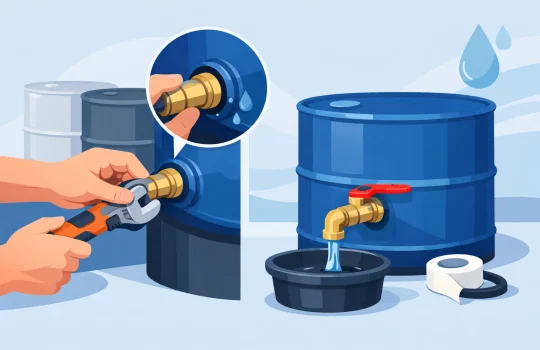
For an occasional user with a jerry can, a secure spout and spare cap may be enough. For someone decanting from a drum each week, a fitted outlet, hose arrangement and filter can make the work faster and far less messy. If you are using an IBC, an outlet mesh filter can stop debris at the source before it reaches a smaller container or transfer hose.
Before ordering, measure rather than guess. Check the internal or external thread, opening diameter, required spout reach and where the container will be used. A fitting that works perfectly on a bench may be too bulky beside a vehicle filler neck or too long to store safely in a van.
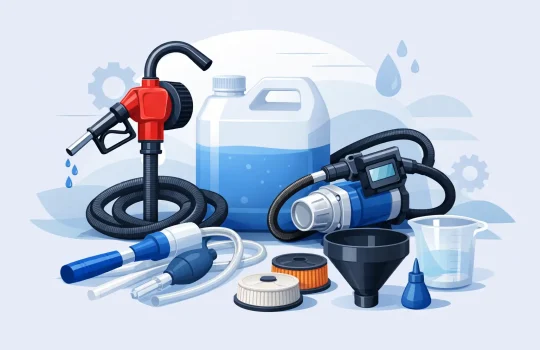
A sensible biodiesel handling kit often includes these five practical items:
- A compatible spout sized for the container and the filler neck.
- A cap or plug that seals the container between uses.
- The correct adaptor where threads do not match.
- A filter suited to the level of debris you need to catch.
- A clean storage holder or tray to keep accessories together and off the floor.
That last item is easily overlooked. Spouts and fittings become dirty when they are left loose on a workbench, buried in a toolbox or rolling around in the back of a vehicle. Keeping them together, upright and protected means they are ready when you need them, rather than needing a wipe before every use.
A few checks that prevent expensive mistakes
Treat biodiesel accessories as working equipment, not fit-and-forget add-ons. Before a transfer, inspect the spout, hose and seals for damage. Make sure the receiving container is stable and has enough capacity. Use a drip tray or absorbent material where a spill would be difficult to clean, particularly on porous ground or inside a vehicle.
Do not mix accessories used for fuel with ones used for water, food, cleaning chemicals or other fluids. Even a clean-looking funnel can carry residue that does not belong in a fuel tank. Label dedicated equipment clearly if several people use the same workshop or store.
Also consider temperature. Cold fuel flows more slowly, while a container warmed by direct sun can build pressure. Neither situation is a reason to rush. Open caps carefully, avoid overfilling and give the container time to settle before transporting it.
TMI Shop takes a Mad Approach to Practical Design because the best workshop fixes are often straightforward: a fitting that actually fits, a spout that reaches, and a filter that keeps the muck where it belongs. Set your biodiesel handling kit up once, keep it clean, and every fill becomes one less job to dread.