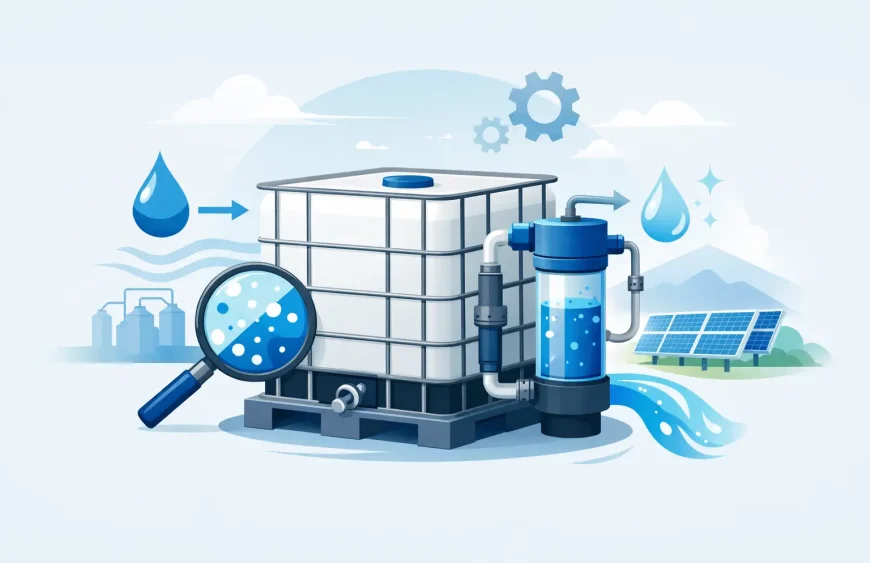
A full IBC can hold 1,000 litres, so a few leaves, bits of plastic, roof grit or sediment can quickly become a costly nuisance once they reach a pump, hose or spray nozzle. What is an IBC filter? Put simply, it is a filter fitted to an Intermediate Bulk Container to stop unwanted debris travelling out with the liquid.
For rainwater harvesting, the most useful version is usually an outlet mesh filter. It sits at or inside the IBC outlet valve and catches debris before it enters the hose. It is a straightforward bit of kit with a useful job: keep the water flowing, protect downstream equipment and make stored water more usable.
What Is an IBC Filter?
An IBC filter separates solid contamination from liquid stored in an IBC tank. The container itself may be used for rainwater, wash water, liquid feed, fertiliser, biodiesel or other suitable fluids. The right filter depends on what is in the tank and what you need to protect.
The term can cover several designs. Some filters are fitted at the inlet to catch debris as a tank fills. Others are inline filters installed in pipework after the valve. An IBC outlet mesh filter is fitted directly to the outlet area, where it provides a final barrier before liquid leaves the tank.
That position matters. Even if a tank was clean when it was filled, debris can still get in through an open lid, a poorly screened rainwater inlet or during handling. Sediment can also settle at the bottom of the container – exactly where the outlet draws from. Filtering at the valve catches the problem before it reaches the parts that are harder to clean or more expensive to replace.
Why Fit a Filter to an IBC Outlet?
An unfiltered outlet is an open route from tank to hose. Small debris may not look serious until it blocks a trigger nozzle halfway through filling a watering can, slows a transfer pump, or lodges in a spray head. Then the job stops while you disconnect fittings and hunt for the blockage.
A mesh filter is particularly useful on rainwater IBCs. Roof runoff commonly carries leaf fragments, moss, insects, grit and flakes of debris from gutters and downpipes. A good pre-filter on the rainwater inlet is still worthwhile, but an outlet filter provides a sensible second line of defence.
For workshop, agricultural and smallholding use, the benefit is much the same. Cleaner liquid protects pumps, valves, irrigation components and hoses. It also reduces the chance of passing dirt into a container, trough or piece of equipment where it does not belong.
There is a simple financial point too. A filter is easier and cheaper to rinse than a blocked pump is to strip down. This is practical prevention, not an unnecessary extra.
How an IBC Outlet Mesh Filter Works
Most outlet filters use a perforated or woven mesh body. Liquid passes through the openings, while particles larger than those openings stay behind. The mesh may be made from stainless steel, plastic or another material chosen to suit the fluid and working environment.
As water leaves the IBC, it must pass through the mesh before entering the outlet fitting or hose. Debris accumulates on the outside or inside of the filter, depending on its design. When flow starts to slow, the filter is removed, cleaned and refitted.
The key measurement is mesh size. A coarse mesh lets water through freely and catches larger matter such as leaves, insects and gravel. A finer mesh catches smaller particles, but it will clog more quickly and may reduce the flow rate. Neither option is automatically better.
If you are filling a water butt, washing muddy boots or watering established plants, a coarser screen may be all you need. If you are feeding a small pump, drip irrigation system or fine spray nozzle, a finer filter is often the sensible choice. The filter needs to suit the most sensitive component after the tank, not just the IBC itself.
Choosing the Right IBC Filter
Start with the outlet fitting. Many IBCs use a common 60 mm coarse-thread outlet, often described as S60x6, but not every container uses the same valve. Measure the outlet, check the thread and confirm whether the filter is designed to fit internally, externally or through an adaptor. Assuming all IBC valves are identical is a reliable way to order the wrong part.
Next, consider the liquid. For rainwater, a corrosion-resistant mesh is a practical choice. For biodiesel, fuels, chemicals or liquid feed, compatibility is essential. A material that is perfectly acceptable for water may swell, degrade or contaminate another fluid. Never treat a general-purpose water filter as suitable for every liquid without checking the material specification.
Think about debris size and required flow together. A very fine filter may sound reassuring, but it is no good if it restricts the supply needed by your pump. Conversely, a coarse screen will not protect a misting nozzle from fine sediment. The right balance saves more frustration than simply choosing the finest mesh available.
Also consider access. A filter that takes seconds to remove and rinse is far more likely to be maintained. This matters on an IBC used daily, or on a rainwater system that collects a lot of gutter debris during autumn.
What an IBC Filter Will Not Do
An outlet mesh filter is not a complete water-treatment system. It catches physical debris. It does not reliably remove dissolved chemicals, algae spores, bacteria, odours or microscopic contamination.
That distinction is especially important where water may be used around food, animals or people. Rainwater from an IBC should not be assumed safe for drinking just because it has passed through a mesh filter. Potable-water treatment requires appropriate filtration and disinfection designed for that purpose.
Nor will an outlet filter solve heavy sediment build-up inside the tank forever. Fine silt can settle beneath or around the filter, and a neglected tank will eventually need cleaning. The filter reduces the mess reaching your equipment; it does not make tank maintenance disappear.
Fitting and Maintaining an IBC Filter
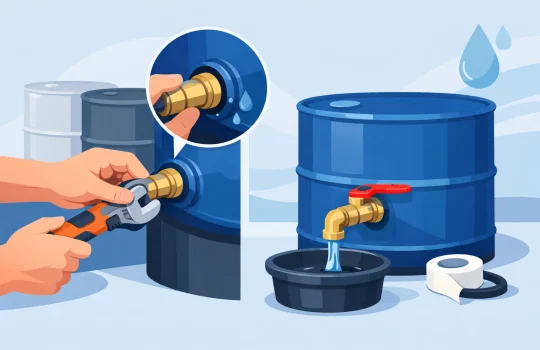
Fit the filter with the IBC valve closed and a container underneath if there is any chance of residual liquid escaping. Clean the outlet threads and sealing surface first. Dirt trapped in a thread can prevent a proper fit and cause the sort of slow drip that wastes water and makes a mess around the tank base.
Do not force a threaded fitting. If it will not start cleanly by hand, stop and check the thread type, adaptor and orientation. Cross-threading a plastic IBC valve is an avoidable problem and usually creates more work than the original job.
How often you clean the mesh depends on the water source and how often you use the tank. A rainwater IBC beneath trees may need checking regularly in leaf-fall season. A covered tank filled with relatively clean water may only need an occasional inspection. Watch for slower flow, pulsing from a pump or repeated nozzle blockages – all are signs that debris is building up.
For most water applications, remove the filter and rinse it with clean water. A soft brush can shift stubborn material without damaging the mesh. Avoid attacking fine mesh with sharp tools, as a small tear gives debris a route straight through. Check seals, threads and the mesh itself before refitting.
A Small Part That Prevents Bigger Jobs
IBCs are brilliant for storing useful volumes of water or other liquids, but they are only as dependable as the outlet system attached to them. A purpose-made mesh filter keeps the dirty part of the job at the tank, rather than inside your hose, pump or nozzle.
Choose a filter that genuinely matches your outlet, liquid and flow requirements, then make checking it part of using the tank. That small habit keeps water moving when you need it – which is exactly what practical kit should do.