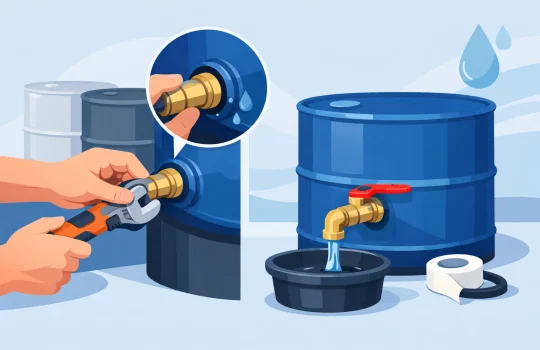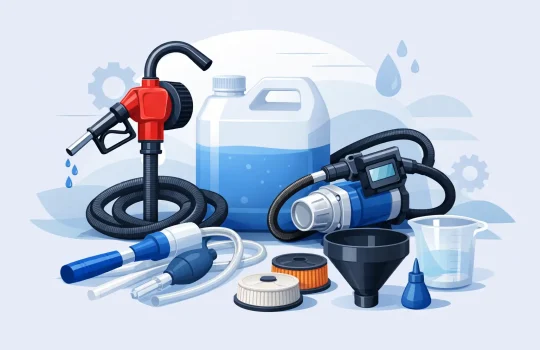
A 25-litre drum is manageable until you try to pour the last few litres into a tank, can or container without coating the floor, your gloves and the side of the drum. Good drum pouring accessories turn that awkward job into a controlled one. They guide the flow, keep dirt out and help you use what you have paid for rather than losing it to drips and spills.
For workshops, smallholdings, vans, garages and garden setups, the right fitting is rarely about adding gadgetry. It is about solving a very ordinary problem properly: getting liquid from one place to another with less waste, less cleaning and less chance of contamination.
Start with the liquid, not the drum
The first question is what you are pouring. Water, diesel, heating oil, biodiesel, lubricants, coolant and cleaning fluids can all need different materials and levels of filtration. A spout that is perfectly useful for rainwater may not be suitable for fuel. Likewise, a seal that fits the thread is not automatically compatible with the liquid passing through it.
Check the drum contents, the thread type and the intended destination before choosing anything. Many drums use common bung openings, but thread sizes and cap styles do vary. Measuring the opening and confirming the fitting specification is far cheaper than ordering twice or trying to force a near-match into place.
Material choice matters most where fuel and oils are involved. Biodiesel in particular can be demanding on unsuitable plastics, rubbers and adhesives. If a fitting is described as biodiesel-compatible, that is useful information, but it still makes sense to confirm it suits your blend, storage conditions and the rest of your system.
The drum pouring accessories that earn their place
A purpose-made pouring spout is usually the main improvement. It creates a controlled path from drum to opening, rather than relying on a removed cap and a hopeful tilt. The useful details are often simple: enough length to reach the filler, a shape that lets you see where the liquid is going, and a diameter that gives a sensible flow rate without overwhelming a small container.
A flexible hose can be the better answer where the receiving opening is low, recessed or awkward to reach. This is common with machinery, heating tanks, vehicle tanks, kegs and containers stored beneath benches. Flexibility helps you position the outlet, but a hose that is too soft can kink, while one that is too wide can be difficult to control. The best option depends on the liquid and the space around the job.
Caps and seals deserve more attention than they normally get. A proper cap keeps stored liquid contained between uses and stops dust, insects and workshop debris entering the spout. A good seal prevents the slow, annoying weep that leaves a stained shelf or a diesel smell in the back of a van. If you regularly move drums, a secure closure is not a luxury.
For stored water or liquids that may collect debris, an outlet mesh filter can make a real difference. It catches leaves, sediment and larger contamination before they head into a hose, watering system or container. It will not make dirty water potable, and it is not a substitute for the right treatment where water quality matters. It does, however, prevent avoidable blockages and saves time clearing rubbish from downstream fittings.
Control the flow before it controls you
Most spills happen at one of three points: when the drum is first tipped, when air struggles to enter as liquid leaves, or when the receiving container is nearly full. The right setup addresses all three.
A long, well-supported spout allows you to start slowly and aim before increasing the angle. If the drum is heavy, do not rely on wrist strength alone. Place it on a stable surface at a workable height, or use a suitable drum support or decanting arrangement. Trying to lift and pour a full drum from the floor is a reliable way to strain yourself and miss the opening.
Ventilation is another overlooked factor. Liquid cannot leave a closed drum smoothly if air cannot replace it. The familiar glugging flow is messy because it surges rather than pours. Depending on the drum design and accessory setup, a vented arrangement can provide a steadier stream. Do not modify a drum casually, especially one used for fuel or chemicals. Use fittings designed for the container and follow the product and liquid safety guidance.
It is also worth matching outlet size to the task. A fast-flowing outlet is useful for filling a larger tank, but it is the wrong tool for a five-litre can. Slower, more controlled transfer may take an extra minute, yet it can save far more time than wiping up a spill, replacing lost product or cleaning contaminated equipment.
Keep contamination out of the system
Clean pouring is not only about keeping the outside of the drum tidy. It is also about protecting what goes into the drum, through it and out the other end. A dirty cap placed on a dusty bench can introduce grit into fuel. An uncovered hose stored in a shed can collect insects, swarf and rainwater. Small contaminants become bigger problems when they reach filters, injectors, pumps or narrow irrigation fittings.
Give each liquid its own clearly identified accessory where possible. Using the same hose for diesel and water, or oil and coolant, creates unnecessary risk. Labels are a practical safeguard, particularly where several people use the same workshop or store. A coloured tie, marked cap or permanent label can prevent an expensive mix-up.
After use, allow any remaining liquid to drain safely, wipe the exterior and refit the cap. Store spouts and hoses so their open ends stay protected. This is not fussy housekeeping. It is how you make a useful fitting last and avoid transferring yesterday’s dirt into tomorrow’s tank.
Choosing a setup for real jobs
A gardener transferring rainwater from a drum may need a simple outlet with mesh filtration to keep leaves out of a watering system. A smallholder handling diesel for machinery may need a fuel-compatible spout or hose that reaches a recessed filler without dribbling down the side. A workshop using oils or coolant may value a narrow outlet that gives precise control into smaller containers.
For van users and mobile trades, storage is part of the decision. A long spout is no help if it rattles around loose, gets crushed behind tools or cannot be capped securely. Think about where the accessory will live between jobs, not only how it works during the pour. Compact, protected storage means the fitting is ready when you need it.
There is no single best arrangement for every drum. The practical choice comes from the liquid, the drum thread, the height of the source, the size of the receiving opening and how often the job is done. A basic spout may be all that is needed for occasional water transfer. Frequent fuel handling or awkward filling points justify a more specialised setup.
A few checks before every transfer
Before opening the drum, inspect the fitting for cracks, hardened seals, blocked mesh and damaged threads. Make sure the receiving container is stable and has enough capacity. Keep the pour area clear, especially if you are working around vehicles, machinery or stored stock.
With fuels and chemicals, use the appropriate personal protective equipment, keep ignition sources away and follow the handling guidance for that liquid. Never assume that a cleaner-looking pour removes the need for sensible safety measures. Accessories improve control; they do not change the hazards of the contents.
The best practical inventions remove a frustration you have accepted for too long. TMI Shop takes a Mad Approach to Practical Design because pouring from a drum should not mean balancing, guessing and cleaning up afterwards. Choose accessories that fit the job, look after them, and the next transfer can be the uneventful two-minute task it ought to be.