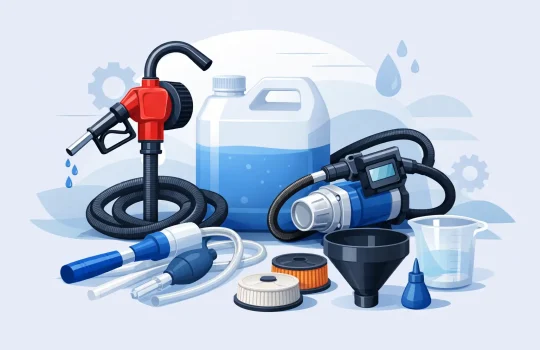
A badly aimed jerry can, a blocked rainwater outlet or a hose with nowhere sensible to live can turn a five-minute job into a wet, wasteful nuisance. That is where British-made practical inventions earn their keep. They are not built to look clever on a shelf. They are made to make pouring cleaner, filtering easier and storage less awkward when there is real work to get on with.
For tradespeople, gardeners, mechanics, smallholders and anyone running a busy workshop, the best invention is often the one that removes a frustration you had simply learned to tolerate. A proper fitting, filter or holder can save more time over a year than another flashy gadget ever will.
Practical design starts with an irritating problem
Useful products tend to begin in unglamorous places: beside a fuel drum, under an IBC tank, in the back of a van or next to a water butt full of leaves. The problem is usually obvious once you have dealt with it a few times. Standard parts do not quite fit. A spout dribbles down the side of the container. Debris reaches a pump. A hose kinks, gets trodden on or vanishes into a pile of equipment.
Mass-produced accessories often aim to suit everybody reasonably well. That is understandable, but it can leave the person with a specific job improvising with tape, funnels, cable ties and crossed fingers. British-made specialist products can take a different route: start with the awkward task, then design around the way it is actually done.
That means paying attention to details generic accessories can miss. The angle of a pour matters. The diameter and thread of a connection matter. So does whether a material will stand up to biodiesel, outdoor weather, repeated handling or the grime of a working garage. None of these details is exciting in isolation. Together, they decide whether a product works cleanly on Monday morning and still works after months of use.
What makes British-made practical inventions worthwhile?
British manufacture is not automatically a guarantee of a better product. A poor design remains a poor design wherever it is made. But when a product is developed close to the people making and using it, there is a useful opportunity to refine it quickly.
An inventor-led maker can spot where customers are struggling, alter a shape, improve a mounting point or offer a fitting for a less common application without waiting for a huge overseas production run. That is particularly valuable in practical niches, where one small variation can make the difference between a clean job and a constant annoyance.
It also supports clearer accountability. Buyers of specialist equipment want to know what a product is for, what it connects to and where its limits are. Good practical design does not pretend one item solves every problem. It gives you a direct answer: this is made for this task, this fluid, this outlet or this space.
The value is in fewer workarounds
A purpose-built solution usually pays back through small gains. You waste less liquid when filling. You spend less time cleaning drips from paving, vehicle paintwork or workshop floors. You protect pumps and stored water from larger debris. You stop buying replacements for parts that were never suitable in the first place.
The saving is not always dramatic on the first use. It is cumulative. A filter that catches leaves before they cause a blockage, or a holder that keeps a frequently used item in the same place, removes repeated interruptions from the week. Practical buyers understand that a tidy, reliable setup is not about appearance. It is about getting the job done without hunting for kit or fixing preventable mistakes.
Fluid handling is where design earns its place
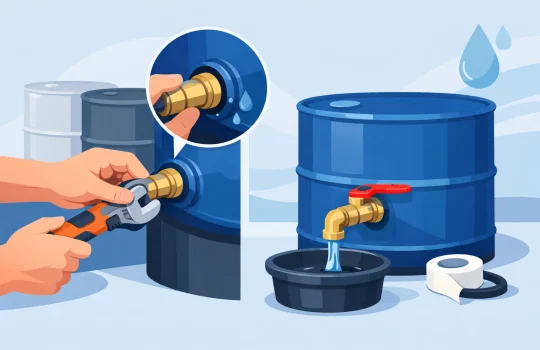
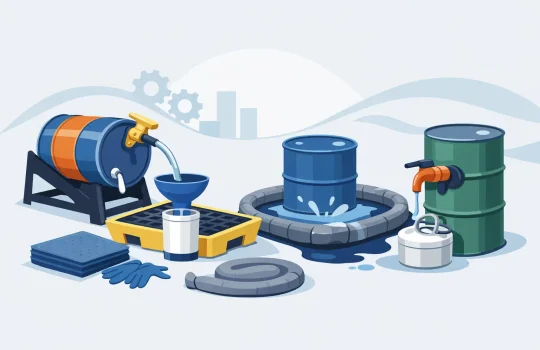
Pouring and transferring liquids looks simple until the liquid is expensive, messy, flammable or hard to clean up. Fuel, oils, biodiesel, water and brewing liquids all demand the right approach. A poor connection or badly shaped spout can leave you with leaks, slow flow or liquid running down the outside of a container.
A well-designed fuel spout should help direct the flow where it needs to go, rather than forcing the user to balance a heavy can at an awkward angle. The fit matters as much as the spout itself. If it is loose, unsuitable for the container or difficult to control, the promise of cleaner pouring disappears quickly.
Biodiesel users have another consideration: compatibility. Materials that cope happily with one liquid may not be the right choice for another. It pays to check that hoses, seals and fittings are intended for the fuel or fluid in question. Choosing on price alone can be false economy if a component degrades, swells or leaks after regular exposure.
For keg hoses and other transfer setups, the practical questions are equally plain. Is the hose the right bore? Does it reach without being stretched tight? Can it be cleaned and stored properly? Does the fitting suit the equipment already in use? A little care before buying prevents a collection of adapters that never quite seals as it should.
Filtration protects the work you do afterwards
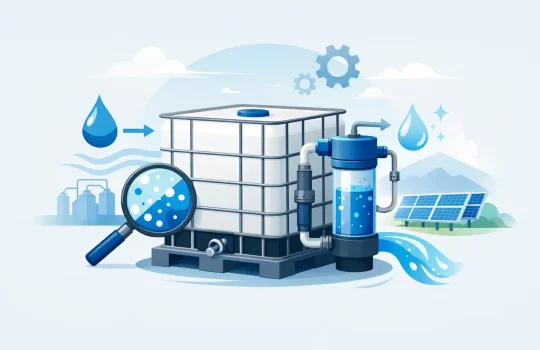
Rainwater harvesting is a sensible way to make use of a free resource, but collected water brings debris with it. Leaves, moss, insects and general roof grit can find their way into containers, outlets and pumps. Ignore it, and the system becomes harder to maintain precisely when you want it to be dependable.
Outlet mesh filters give larger debris somewhere to stop before it enters the next part of the system. They are a straightforward answer, but the design still has to suit the job. Mesh that is too fine may restrict flow or need constant cleaning. Mesh that is too open may let through the material you were trying to stop. The right choice depends on the water source, the outlet arrangement and what happens to the water next.
If you are feeding a garden tank, a basic filter may be enough. If the water is going towards a pump, irrigation system or more sensitive equipment, protecting downstream components becomes more important. Filtration is not a replacement for sensible maintenance, but it gives a system a far better chance of running without frequent blockages.
This is a good example of practical invention at its best. It does not overcomplicate the task. It deals with a known point of failure before it becomes a bigger repair or cleaning job.
Better storage is a working advantage
Storage accessories are easy to underestimate until you work from a cramped van, shed, caravan or garage. When every square foot is doing several jobs, loose equipment becomes more than an eyesore. It gets damaged, takes longer to find and can create a hazard when travelling or moving around a busy workspace.
A compact holder or mounting solution gives an item a home. That might be a hose, a tool, a container or a frequently used fitting. The best version is not necessarily the biggest or most elaborate. It is the one that keeps the item accessible, secure and out of the way of everything else.
Consider where you naturally reach for an item and how it is used. A holder mounted too high, too low or behind other equipment will not improve the routine. Nor will a design that is difficult to clean around or impossible to use with gloves on. Good workshop organisation follows the work, rather than forcing the work to fit a tidy-looking layout.
How to choose the right specialist invention
Start with the exact failure you want to remove. “I need a hose” is broad. “I need to transfer this liquid from this container without drips, using this connection” is a buying brief. Measure threads, outlet diameters, available mounting space and the route a hose needs to take. A few minutes with a tape measure can prevent an expensive wrong fit.
Then think about use frequency. An occasional garden task may need a simple, easy-to-store solution. Daily workshop use may justify a tougher item built for repeated handling. Neither approach is wrong. The mistake is expecting a light-duty generic accessory to perform like dedicated working kit.
Finally, look for a clear purpose. At TMI Shop, A Mad Approach to Practical Design means focusing on the little jobs that waste time, make a mess or create needless faff. The strongest products are not trying to be everything to everyone. They are designed to solve one real problem properly.
The next time you find yourself catching drips with a rag, clearing the same blockage again or moving loose kit out of the way for the tenth time, treat it as useful information. That irritation may be exactly where a practical invention belongs.