A fuel can that dribbles down its side, a hose that kinks at the worst moment, or a filter that lets leaves straight into a water butt are not dramatic failures. They are the small, repeated annoyances that waste time, make a mess and cost more than they should. That is where made in England workshop tools earn their place: not as badges for a shelf, but as purpose-built answers to jobs that generic accessories often get wrong.
For people who work in a garage, run a smallholding, maintain a van or simply prefer equipment that does what it claims, the point is straightforward. A good tool or fitting should make the task cleaner, quicker and less frustrating from the first use. British manufacture can support that aim when it is paired with proper design, practical testing and a clear understanding of the job at hand.
Made in England workshop tools start with the job
The best workshop products are rarely invented by staring at a catalogue. They come from spotting a problem in use. Perhaps a standard spout is too short to reach a filler neck without tipping the can at an awkward angle. Perhaps an IBC outlet needs protection from debris, but the available filter is flimsy, poorly sized or difficult to clean. Perhaps hoses and fittings end up in a tangled heap because there is nowhere sensible to keep them.
A locally designed product has a useful advantage here. The person designing it can be close to the real application, the materials and the feedback. Changes do not need to work their way through a distant chain of buyers, factories and distributors before a weak point is addressed. A small alteration to a hose angle, mesh size, retaining clip or mounting point can make a surprisingly large difference to everyday use.
This does not mean every product made overseas is poor, nor that every item made in Britain is automatically better. The useful distinction is whether the product has been designed around a genuine task rather than selected because it is cheap, broadly similar and easy to import. Workshop users know the difference quickly. It shows in how securely something fits, how easily it cleans, whether it survives regular handling and whether it creates a new problem while solving the old one.
Practical design beats generic adaptation
Generic tools ask the user to adapt. Purpose-built tools do the adapting themselves.
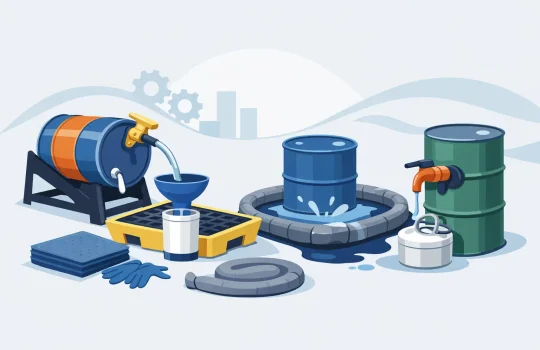
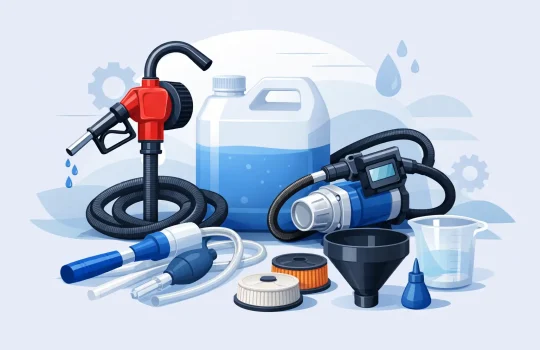
Consider fluid handling. Pouring fuel, oil, biodiesel or stored water involves more than moving liquid from A to B. You need control over flow, a secure connection, enough reach, material compatibility and a way to avoid spills. A badly chosen spout may split, weep at the joint or leave you holding a heavy container at the wrong angle. A sensible one reduces the chance of waste before the first drop is poured.
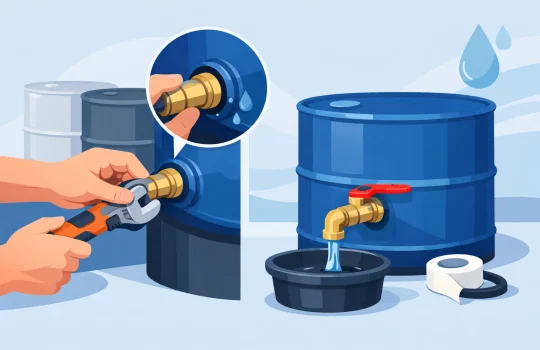
The same applies to rainwater harvesting. A water butt can collect useful water, but it can also collect leaves, grit, insects and roof debris. An outlet mesh filter is a simple item, yet its usefulness depends on the mesh being suited to the debris, the fitting being secure and the part being practical to inspect and clean. If removing it is a fiddle, it will be ignored. If it restricts flow too much, it will soon be replaced.
That focus on the full job is what gives specialist workshop accessories their value. The tool is not there to look impressive. It is there to remove the awkward bit.
What quality looks like in a working workshop
Quality is often described in vague terms, but practical buyers can judge it in seconds. It is in the feel of a fitting as it threads on, the stiffness of a holder when it is loaded, and the way a hose behaves when it is cold, wet or under pressure. It is also in less obvious details: edges that do not snag, parts that can be rinsed clean and materials chosen for the liquids they will actually meet.
For made in England workshop tools, material choice deserves particular attention. Not every plastic suits every chemical. Biodiesel, for example, can be less forgiving than conventional diesel on unsuitable seals, hoses and fittings. A product intended for it needs compatible materials, not hopeful marketing. Likewise, a component used outdoors needs to cope with UV exposure, rain and temperature changes if it is expected to remain useful season after season.
There is a trade-off. Heavier or more specialised materials can cost more than a basic universal alternative. But the cheapest part is not always the least expensive solution. A failed fitting can mean wasted fuel, contaminated water, a damaged work surface or a job delayed while you find a replacement. Paying for the right part once often beats buying a sequence of almost-right ones.
Small batches can mean better judgement
Small-scale manufacture is sometimes treated as a limitation. For practical products, it can be a strength. It allows an inventor-led business to make considered improvements, respond to recurring customer questions and avoid carrying ranges full of unnecessary variations.
That does not mean every task needs a bespoke gadget. A workshop full of single-purpose items can become cluttered and expensive. The useful products are the ones that solve a recurring frustration well enough to justify their space. A compact holder that keeps a frequently used accessory to hand, a clean-pouring spout that prevents regular spills, or a filter that protects stored water all meet that test because they save effort repeatedly.
At TMI Shop, that is the Mad Approach to Practical Design: start with the irritation, build a straightforward fix, and leave out the fluff. The aim is not novelty for its own sake. It is a better way to handle, filter, store or organise something that should not be a nuisance in the first place.
How to choose tools that will earn their keep
Before buying any workshop accessory, be specific about the job. “I need a hose” is rarely enough. What liquid will it carry? What fitting does it need to connect to? Does it need flexibility, chemical resistance, a particular length or a way to stow it neatly? A few minutes spent checking the application can prevent a costly near miss.
Measure threads, outlet diameters and available space where possible. A useful product that does not fit is still useless. If you are replacing an existing part, check whether the difficulty comes from the part itself or the wider setup. For example, slow filling may be caused by an airlock, a restricted vent or debris at the outlet, not merely the hose.
Think about cleaning and maintenance as well. Filters need inspection. Fluid-transfer equipment needs rinsing or draining when switching liquids. Holders need mounting where they will not obstruct access or catch on equipment. The best setup is one you can maintain without dismantling half the workshop.
It also pays to be honest about frequency of use. For an occasional garden task, a simple solution may be perfectly sensible. For daily vehicle work, a busy farmyard or regular fuel transfer, it is worth choosing equipment designed to take repeated use. The right level of specification depends on the workload, not on owning the most expensive option.
British-made is most useful when it stays practical
“Made in England” should mean more than a flag in the product description. It should point to accountability, thoughtful design and a product that was made with its working environment in mind. For a workshop owner, mechanic, gardener or caravan user, those are the qualities that matter long after the packaging has gone in the bin.
A well-designed accessory will not make every awkward job disappear. It can, however, stop a routine task becoming a spill, a blockage, a scramble for missing kit or another trip to buy a replacement that ought to have lasted. Choose the tool that suits the job, fit it properly and give the irritating little problems in your workshop fewer chances to return.