If your IBC keeps feeding grit, leaf bits or sludge into a hose, pump or tap, the ibc tank outlet filter is not a nice extra – it is the part that stops a simple job turning into a blocked, messy one. Most problems start at the outlet, where debris finally gets a chance to travel downstream and foul up everything attached after it.
That matters whether you are drawing rainwater for the garden, moving reclaimed liquids around a workshop, or trying to keep storage water cleaner for longer. The right filter saves time, reduces cleaning, and protects the bits that are usually more expensive than the filter itself.
What an IBC tank outlet filter actually does
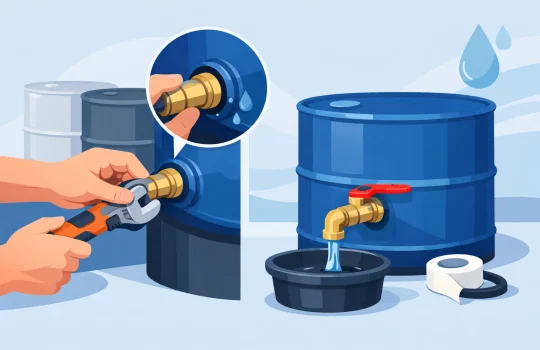
An IBC tank outlet filter sits where the liquid leaves the container and catches solid contamination before it reaches your hose, valve, pump or dispensing setup. That sounds obvious, but it solves a very specific weak point. Once debris gets past the outlet, it tends to lodge in awkward places – tap seats, narrow fittings, sprayer nozzles and pump internals.
For rainwater users, the usual culprits are leaf fragments, moss, insect debris and general sediment. In workshop or yard use, you may also be dealing with flakes from old containers, dirt introduced during filling, or residue from previous handling. None of that has to be large to cause trouble. A surprising amount of disruption comes from small, stringy or irregular bits that find the one narrow section in your setup and stop flow.
This is why an outlet-mounted filter often makes more sense than trying to fix the problem further down the line. Catch the mess early and the whole system behaves better.
Why the wrong ibc tank outlet filter causes more hassle
A filter that is too coarse lets through the very debris you were trying to stop. One that is too fine can slow flow too much, especially if the liquid is not perfectly clean to begin with. That is the trade-off, and it is where many people come unstuck.
If you are only drawing relatively clean rainwater for basic outdoor jobs, you may not need extremely fine filtration at the outlet. If you go too fine, the screen may clog faster than it is worth, particularly after windy weather or when the tank has collected seasonal debris. On the other hand, if you are protecting a pump, a precision nozzle or a narrower hose arrangement, a coarse screen may be little more than a gesture.
Material matters as well. A flimsy filter can distort, split or fit badly. That usually shows up as poor sealing, bypass around the mesh, or a part that is annoying to remove and clean. Practical buyers know the pattern – cheap fitting, cheap result, then the same job done twice.
Matching mesh size to the job
There is no single perfect mesh for every setup. It depends on what is in the tank, what the liquid is being used for, and how much flow you need.
For straightforward rainwater harvesting, you are usually balancing two aims: stopping obvious debris and keeping water moving at a sensible rate. In that case, medium filtration often gives the best real-world result. It catches the bits that cause most blockages without turning the outlet into a maintenance point every five minutes.
If your downstream equipment is more sensitive, finer filtration becomes more useful. That said, a finer mesh only works well if the rest of the system is designed around it. Dirty water plus very fine mesh equals frequent cleaning. There is nothing clever about fitting a filter so restrictive that the whole job becomes slower and more fiddly.
For thicker liquids or more variable contents, you need to be even more realistic. The finer the screen, the more likely it is to blind over quickly. In those situations, a coarser first-stage filter at the outlet can be the more practical choice, with any finer filtration handled later if needed.
Common uses around the home, garden and workshop
One reason the ibc tank outlet filter matters is that IBCs get used for all sorts of jobs well beyond basic storage. The demands change with the job.
In garden and allotment use, the main aim is usually keeping leaves, insect bodies and sediment out of watering gear. If you have ever had a hose attachment splutter because a bit of organic debris jammed inside, you already know why outlet filtration earns its keep.
In workshop settings, cleanliness often matters for different reasons. You may be filling smaller containers, feeding transfer equipment, or trying to avoid contaminating valves and fittings. Even where the liquid itself is not especially delicate, you still want a setup that runs cleanly and predictably.
On smallholdings and yards, the issue is often reliability. Outdoor storage attracts contamination. Lids get opened, dust gets in, weather plays its part, and tanks are not always treated gently. A decent outlet filter helps turn a rough-and-ready storage method into something a lot more controlled.
Fit is not a minor detail
A filter is only useful if it actually fits the outlet arrangement properly. IBC setups are notorious for looking standard until you try combining parts from different sources. Thread type, outlet size and the shape of the housing all affect whether the filter sits correctly and seals as it should.
Poor fit creates two kinds of trouble. The first is obvious – leaks, wobble, awkward installation, and a part that works loose when handled. The second is quieter but just as annoying – liquid finding a path around the filtering element rather than through it. At that point you have the appearance of filtration without the benefit.
That is why purpose-built accessories beat generic improvisation more often than not. An inventor-led approach to practical design is not about making things look clever. It is about removing those fiddly mismatches that waste time in the real world.
Cleaning and maintenance without the faff
Any outlet filter worth fitting will need cleaning. The question is how often, and how irritating the job becomes. A well-designed filter should be straightforward to remove, rinse and refit without tools, swearing, or liquid everywhere.
How often you clean it depends on the source liquid and the season. Rainwater systems usually need more attention after storms, autumn leaf fall, or periods where the tank is topped up from a dirty catchment area. Workshop and yard setups vary more, but the rule is simple enough: if flow drops, check the filter before blaming the rest of the system.
It is also worth remembering that frequent clogging can point to a system issue rather than a filter issue. If the tank is collecting too much debris upstream, the outlet filter is doing all the hard work. In that case, adding better pre-filtration at the fill point may make the whole setup easier to live with.
When a finer filter is not the smarter choice
People often assume finer automatically means better. In practice, better means suitable.
If your priority is fast dispensing into cans, watering equipment or general yard use, an ultra-fine mesh can become more nuisance than help. Flow reduction is not just an inconvenience. It slows routine tasks, encourages users to remove the filter altogether, and defeats the point of fitting one.
There is also the issue of what the filter is expected to protect. A tap used for basic water draw-off does not need the same filtration standard as a sensitive pump or a narrow application nozzle. Over-specifying the filter can be just as impractical as under-specifying it.
This is where honest product design matters. The best solution is not the one with the most claims. It is the one that suits the actual liquid, the actual outlet, and the actual job without creating a new problem.
Choosing a practical outlet filter with confidence
If you are buying an ibc tank outlet filter, start with the liquid and end with the application. Ask what contamination is realistically present, how much flow you need, and what equipment sits downstream. That gives you a much better answer than chasing the finest mesh available.
Then look hard at fit, durability and ease of cleaning. A filter that saves your pump but is a nightmare to maintain will not stay in service for long. Good workshop-made accessories tend to get this right because they are built around use, not just catalogue specs.
At TMI Shop, that is the whole point of practical invention – solve the annoying bit properly so the rest of the job becomes easier. The right filter should reduce mess, reduce blockages and make your setup feel sorted rather than improvised.
If your tank outlet is the place where trouble keeps starting, that is also the best place to stop it.