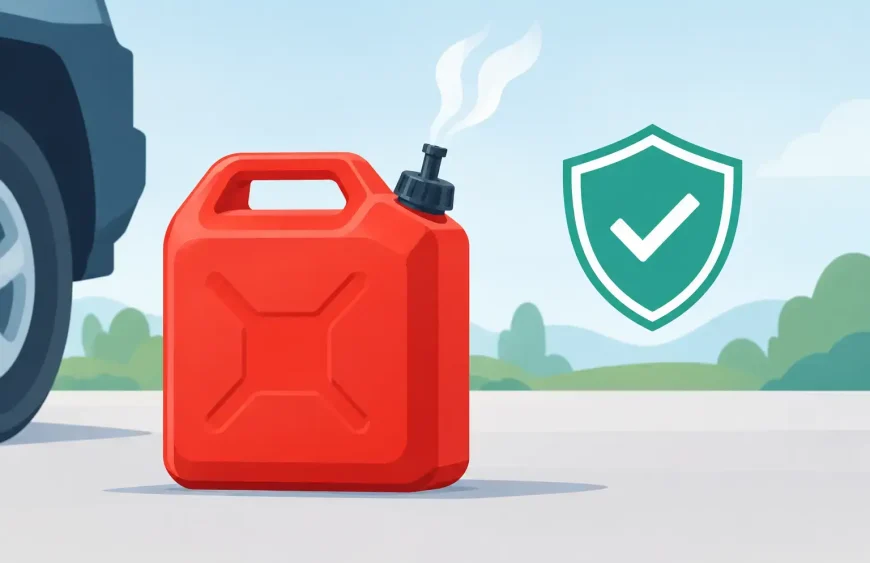
A fuel can that hisses when opened can make anyone pause. The short answer to can fuel containers vent safely is yes – but only when the container has been designed to manage pressure properly and is used as intended. A loose cap, a drilled hole or a makeshift breather is not safe venting. It is an easy route to fuel vapour, spills and a serious fire risk.
For anyone filling mowers, generators, classic cars, tractors or plant, the aim is simple: fuel should flow where you need it, without a glugging can, a wet forecourt-style smell or petrol running down the side of the tank. Getting that right starts with understanding what the can is doing.
Why fuel containers build pressure
Fuel expands as it warms. Leave a partly filled petrol can in a van, shed or car boot on a warm day and both the liquid and the vapour above it can increase pressure inside the container. A drop in temperature can have the opposite effect, creating a slight vacuum.
Petrol is particularly unforgiving because it gives off highly flammable vapour. Diesel has a higher flash point and does not produce vapour in the same way, but it still needs to be stored and poured cleanly. Contamination, swelling seals and spills are all problems worth avoiding.
A properly made fuel container accounts for these changes. Depending on its design, it may use a pressure-relief arrangement, a controlled vent built into the closure, or a spout and cap system that allows air back into the can during pouring. The key word is controlled. The container should not be left open to the atmosphere in storage.
Can fuel containers vent safely during pouring?
They can, provided the vent is part of the original, compatible system. When fuel leaves a sealed container, air needs to replace it. Without that air path, pouring becomes slow and uneven: fuel surges out, stops, then surges again. That is the familiar glugging action that makes filling awkward and messy.
A well-designed spout arrangement helps fuel flow smoothly while keeping the stream under control. It should fit the can securely, direct fuel into the receiving tank and be closed or removed according to the manufacturer’s instructions once the job is finished.
This is where improvised fixes cause trouble. Drilling a small hole in the cap may seem like a quick cure for poor flow, but it leaves an uncontrolled vapour path. It can leak if the can falls over, allow rainwater or dirt in, and may compromise a container’s approval. Wedging the cap loose is no better, particularly in a vehicle or enclosed space.
If a can pours badly, replace a damaged spout, cap or seal with a part intended for that container and fuel type. Do not try to turn a sealed can into a permanently vented one.
Pressure relief is not the same as an open vent
There is an important distinction. A pressure-relief feature is designed to respond under particular conditions. An open vent allows vapour to escape whenever the can is stored, moved or knocked over.
The first can be part of a tested fuel-container design. The second turns a practical fuel can into a leak waiting to happen. Petrol vapour can travel to an ignition source well away from the container, so a smell of petrol in a shed, garage, caravan locker or van should never be dismissed as normal.
Signs your fuel can needs attention
Fuel containers do not last forever. Sunlight, knocks, age, incompatible fuel and repeated tightening can all affect plastic, seals and threads. Give the can a quick check before filling it, not when you are already standing over an engine bay.
Look for cracks, bulging, faded or brittle plastic, a distorted neck, damaged threads, perished seals and staining around the cap. A cap that will not tighten squarely is a problem, as is a spout that drips after use. If petrol vapour is clearly noticeable when the container is closed, take it out of service until you have found the cause.
Pay attention to pressure too. A little release when opening a warm can may happen, but a severely swollen container, persistent hissing or fuel forced out around the closure is not something to ignore. Keep it away from flames, sparks and hot equipment, and follow the container manufacturer’s safety guidance. Replacing a suspect can costs far less than dealing with lost fuel, damaged tools or a fire.
A cleaner way to fill engines and equipment
Safe venting is only one part of cleaner fuel transfer. The order of the job makes a real difference.
First, put the engine or equipment on level ground, switch it off and allow hot parts to cool. Never fill petrol-powered equipment while it is running or still hot from use. Keep cigarettes, naked flames, battery chargers and any source of sparks well away.
Next, place the container securely and open the receiving fuel cap before you start pouring. Use a spout that reaches properly into the filler neck rather than balancing a heavy can at an awkward angle. A purpose-made fuel spout is far easier to control than a cut-down funnel or a random length of hose.
Pour steadily rather than tipping the can sharply. If the flow becomes erratic, stop and check the spout, closure and angle. Do not shake the can to force the last drop out. That is how fuel ends up on hands, paintwork and the ground.
Once finished, refit the can cap and the machine’s fuel cap straight away. Wipe any drips from the outside of the container and deal with spills promptly using suitable absorbent material. Fuel should never be washed into a drain or onto soil.
Petrol, diesel and biodiesel need different thinking
It is tempting to treat every liquid can as the same thing. They are not. Petrol demands the greatest care around vapour and ignition. Diesel is less volatile but can still leak, smell, attract dirt and create a slippery hazard. Biodiesel blends can be harder on some rubbers, plastics and seals than conventional diesel.
For biodiesel users, compatibility matters as much as flow. A fitting that works for a short time can soften, swell or seep if its materials are not suitable for the fuel being stored. Choose containers, seals, hoses and spouts specified for the fuel you actually use, rather than assuming all plastic accessories are interchangeable.
Label every container clearly. Do not use a food or drinks container for fuel, even temporarily, and avoid moving fuel into an unapproved vessel just because it is handy. Clear labelling prevents costly mistakes in a busy workshop, on a smallholding or when several people use the same kit.
Storage matters as much as the cap
Even a sound fuel container cannot compensate for poor storage. Keep containers upright on a stable surface, out of direct sun and away from ignition sources. A cool, ventilated storage area is better than a greenhouse-like shed shelf or a van that bakes in summer.
Do not store petrol inside living accommodation, and do not leave a fuel can rolling around unsecured in a vehicle. Movement can damage caps and spouts, while heat can increase internal pressure. Secure containers upright and check that the closure is fully fitted before travelling.
UK rules on storing petrol, including permitted quantities and container requirements, can depend on where and how it is kept. Check the current official guidance for your situation, especially if you store fuel for business use, machinery, a smallholding or multiple vehicles. Approved containers and sensible storage are not paperwork for paperwork’s sake – they reduce the chance of vapour, leakage and fire.
The practical answer: use controlled parts, not clever shortcuts
A Mad Approach to Practical Design is useful when it improves the job, not when it creates another risk. The best fix for a fuel can that pours poorly is usually a sound, compatible cap and spout system, not a hole in the lid or a loose-fitting funnel.
Choose a container made for fuel, inspect it regularly, use fittings suited to the fuel and keep the container closed whenever it is not actively being filled or poured. If you can smell fuel where it is stored, treat that as a fault to investigate rather than part of the routine. A clean, controlled pour is not just more convenient – it is how a small job stays a safe one.