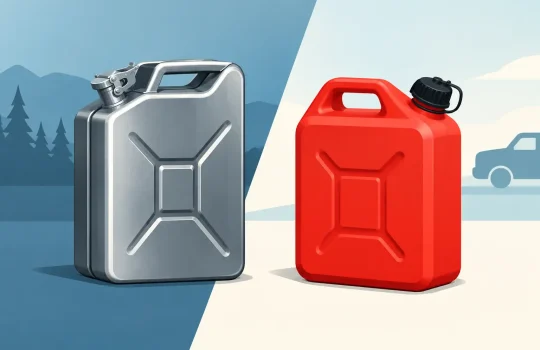
A jerry can is only as useful as the way it pours. Plenty of people put up with splashing fuel down the side of a mower, soaking gloves at the van, or wrestling with a stiff nozzle that never quite seals properly. The right fuel spout for jerry can use fixes that annoyance at source – cleaner transfer, less waste, and far less muttering under your breath.
For anyone regularly filling generators, chainsaws, garden machinery, heaters or site equipment, the spout is not a minor accessory. It is the working end of the can. If it dribbles, vents badly or fits loosely, every refill becomes slower and messier than it needs to be.
Why the fuel spout for jerry can choice matters
On paper, a fuel can spout looks simple. In practice, it has to do several jobs at once. It needs to attach securely, direct fuel accurately, flow at a sensible rate, and cope with repeated exposure to petrol, diesel or biodiesel blends without going soft, brittle or distorted.
That is where many generic options fall down. A poor spout might technically fit the thread, but still leak under angle, glug because it cannot vent properly, or feel awkward when you are filling a tank tucked behind bodywork or under a cover. If you use a jerry can once a year, you may tolerate that. If you use one every week, those small failings become a standing frustration.
A good spout saves more than a bit of fuel. It saves time on every refill, reduces cleanup, and lowers the chance of fuel ending up where it should not – on paintwork, paving, gloves, boots or inside the back of a van.
What makes a good fuel spout for jerry can use?
The best spout is the one that suits the can, the fuel, and the job. That sounds obvious, but it is the point many buyers miss when they pick the cheapest thing available and hope for the best.
Material compatibility comes first. Petrol, diesel and biodiesel do not all behave the same way over time. Some plastics and seals cope well with one fuel but degrade faster with another. If you are handling biodiesel or blended fuels, compatibility is not a nice extra. It is essential.
Fit is the next big factor. Thread size and cap style vary, and “universal” can mean “close enough to be annoying”. A secure fit matters because a spout takes stress when the can is tilted, especially with a full 20-litre container. Any weakness in the connection will show up quickly.
Then there is shape. A shorter, broader spout may be fine for open fillers, but awkward for recessed tanks. A narrow spout reaches better into tighter spaces, though flow rate can be slower. There is always a trade-off. Faster pouring sounds ideal until you are filling a small tank opening and the fuel surges back at you.
Flexibility can help too. A rigid spout gives control, while a flexible section can make awkward angles easier. That said, too much flex can make a full can feel less predictable in the hand. It depends what you are filling and how often you do it.
Common problems caused by a bad spout
Most people do not go looking for a replacement until they have already been irritated by the one they have. The usual complaints are familiar.
Leaking at the cap end is one of the worst because it is rarely spotted until fuel is already on your hand or the side of the can. Poor seal quality, weak threads or badly matched fittings are often to blame. A dribbling tip is another nuisance, especially after pouring, when the last bit runs down the spout and ends up on the machine or floor.
Slow, uneven glugging is also common. That usually comes from poor airflow management. Instead of a smooth stream, the can gulps and surges, which makes accurate pouring harder. If you are topping up a small engine, that stop-start flow is a recipe for overfilling.
Then there is basic usability. Some spouts are simply awkward to store, awkward to remove, and awkward to clean. If an accessory solves one problem but creates three more, it is not much of a solution.
Matching the spout to the job
Not every user needs the same setup. A gardener filling a strimmer has different priorities from a mechanic topping up workshop equipment or a smallholder refuelling diesel machinery.
If you are filling smaller petrol tools, precision matters more than outright speed. A narrower outlet with controlled flow makes life easier. For larger diesel tanks, you may favour a faster pour and a more substantial bore, provided the fit remains secure.
For van users and mobile tradespeople, storage matters as well. A spout that seals properly after use and packs away without leaving residue on other gear is worth having. There is no sense getting clean transfer at the filler neck if the inside of the van ends up smelling of fuel afterwards.
If your work involves mixed fluids or specialist fuels, pay even closer attention to compatibility. That is one reason specialist, inventor-led products tend to earn their keep. They are usually built around actual workshop problems rather than a one-size-fits-all catalogue approach.
Features worth looking for
A well-designed spout usually gets the basics right before adding anything clever. The seal should be dependable, the thread engagement should feel positive, and the material should stand up to repeated use. If any of that feels flimsy from day one, it rarely improves with age.
A controlled outlet shape helps keep pouring clean. So does a design that minimises drips when the spout is withdrawn. Some users also value a cap or closure for storage, particularly if the can travels in a vehicle or sits in a workshop near other kit.
Ease of cleaning matters more than people expect. Fuel systems attract dust, grit and residues, and any awkward internal shape can become a trap for contamination. Simpler designs often win here.
There is also a case for choosing purpose-built over generic. TMI Shop has built its reputation on that mad but sensible idea that everyday workshop annoyances deserve a proper fix, not another compromise. When a product is designed by people who actually handle fluids and fittings, the difference tends to show up in the details.
Don’t ignore safety and storage
A spout is not just about convenience. It also affects how safely fuel is handled. A poor fit or unpredictable pour increases the chance of spills, and spills around engines, hot surfaces or enclosed spaces are never trivial.
Always make sure the spout is properly seated before lifting the can. Check seals regularly, especially if the can is stored in changing temperatures or transported often. Materials expand, harden and wear over time, and even a decent spout will not last forever if it is abused.
Store the can upright where possible, and keep the spout clean when not in use. Dirt on the threads or sealing faces is a simple cause of leaks, yet it is one of the easiest problems to prevent.
Is a flexible or rigid spout better?
This is where the honest answer is: it depends.
A rigid spout usually gives better directional control. If you are pouring into open or easy-to-reach tanks, that can feel more secure and accurate. It is also often easier to keep clean.
A flexible spout comes into its own where access is awkward. If the filler neck sits behind guards, body panels or framework, that extra reach can spare you a lot of tilting and repositioning. The trade-off is that some flexible designs can feel less stable when a heavy can is fully tipped.
For many buyers, the choice comes down to the equipment they use most often. Think less about what looks handiest on the bench and more about where the spout actually has to reach when the can is full.
When it is time to replace your current spout
If the seal weeps, the thread no longer bites cleanly, the material has gone hard or cracked, or the spout drips after every pour, replace it. Trying to stretch a bit more life out of a failing fuel accessory usually costs more in wasted fuel and aggravation than the replacement would have done.
The same goes for makeshift fixes. Tape, improvised washers and forced fittings are rarely the answer with fuel handling. What seems serviceable in the shed often turns into a mess when you are out on a job and trying to refill quickly.
A proper fuel spout for jerry can use should feel like a simple tool that just gets on with it. No leaks, no fighting the thread, no splashback, no second-guessing. That is the standard worth buying to – especially if you are using fuel regularly and would rather spend your time working than wiping it off the side of the can.