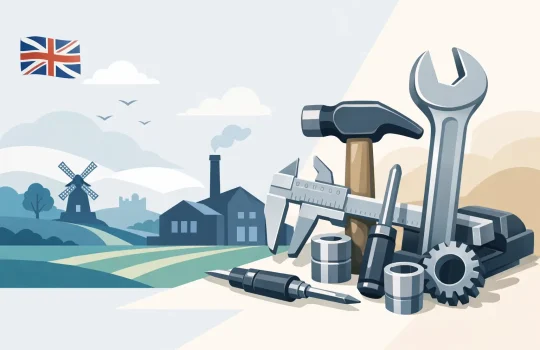
Ask a practical buyer what products are made in the UK, and the honest answer is more than most people think – just not always the obvious mass-market stuff. British manufacturing is very much alive, but it tends to show its strength where usefulness matters most: specialist tools, engineering parts, filtration gear, workshop accessories, food production, textiles, furniture and a long list of niche products that need to work properly rather than simply look good on a shelf.
That matters if you are buying with a job in mind. When you need a fitting that seals cleanly, a spout that pours without glugging, a filter that keeps debris out, or a holder that stops kit rattling around in the van, where something is made often says a lot about how it has been designed. UK-made products are often strongest in exactly these problem-solving categories because they are built by businesses close to the users, close to the applications and close to the complaints that generic imports tend to create.
What products are made in the UK across everyday sectors?
The UK still makes a broad spread of goods, but the pattern has changed over time. Instead of trying to compete on sheer volume with giant overseas factories, many British manufacturers now focus on quality, specialist use, shorter runs and better design. That is why you will often find UK-made products in categories where precision, durability or practical improvements make a real difference.
Engineering and industrial components are a clear example. The UK continues to produce valves, couplings, fasteners, machined parts, fluid-handling accessories, workshop fixtures and bespoke fittings for everything from garages to farms. These are not glamorous products, but they keep businesses moving. A poor-quality fitting can mean leaks, wasted fuel, contaminated water or repeated replacements. In this sort of market, dependable design beats bargain-bin pricing very quickly.
The same applies to agricultural and outdoor products. British firms make feeders, gates, smallholding equipment, water management components, rainwater harvesting accessories and filtration products designed for local conditions. UK weather is not gentle, and products used outdoors here need to cope with mud, frost, heavy rain and long periods of use. That tends to produce a more honest kind of design.
Food and drink are major areas too. Cheese, biscuits, preserves, confectionery, beer, spirits and ready-made foods are all manufactured in the UK at scale. Textile production also remains active, especially in wool products, upholstery fabrics, workwear, knitwear and specialist sewn items. Furniture, mattresses, soaps, candles, ceramics and selected household goods are still widely made here as well.
Then there is the specialist end of ecommerce and workshop manufacture – the overlooked corner where practical inventions live. This is where small British makers often outperform larger brands because they are solving a specific irritation, not chasing a broad trend.
Why UK-made products still matter for practical buyers
If you are buying on function, not sentiment, British-made can still be the sensible option. Not automatically, and not in every category, but often enough to matter.
One advantage is product development that starts with an actual problem. A lot of generic accessories are made to fit the widest possible market, which usually means compromise. A spout pours badly because it is trying to suit too many containers. A hose fitting is close enough, but not quite right. A storage holder looks tidy in photos but is awkward once mounted in a working van or shed. UK makers, especially smaller ones, often design around a specific task first. The result is less adapting, less bodging and fewer workarounds.
Another advantage is consistency. If a business designs and manufactures in the UK, it usually has tighter control over materials, tolerances and revisions. That does not guarantee perfection, but it does mean problems can be spotted and fixed faster. For buyers using products in workshops, gardens, caravans, garages or on-site, that matters more than fancy packaging.
Lead times can also be better, especially for niche items. If you need a specialist part or fitting, having it made domestically can reduce delays and make repeat supply more reliable. The trade-off, of course, is that UK-made products can cost more upfront. Labour, compliance and smaller production runs all add cost. The real question is whether that higher initial price saves time, mess, waste and replacement costs later on.
Often, it does.
Where British manufacturing is strongest
Some categories are especially well suited to UK production because they reward knowledge more than sheer volume.
Specialist workshop and fluid-handling products
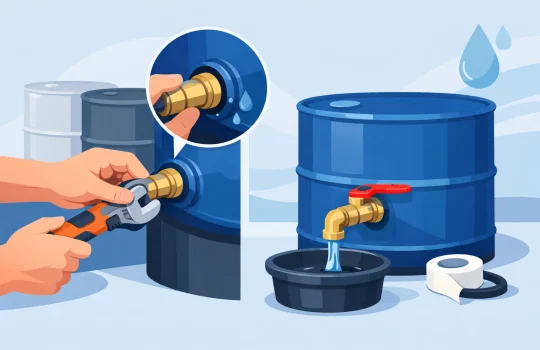
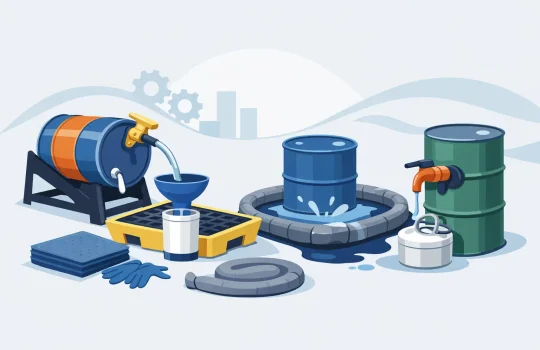
This is one of the clearest examples. Products such as fuel can spouts, biodiesel-compatible fittings, keg hoses, IBC outlet filters and rainwater harvesting filters are all the sort of items that benefit from hands-on development. The difference between a decent design and a frustrating one is obvious the first time you use it. If a spout splashes, if a filter blocks too quickly, if a connector feels loose, you know about it straight away.
That is why smaller British manufacturers still do well in this space. They are usually closer to the actual use case, whether that is cleaner pouring in a workshop, faster transfer in a yard or keeping leaves and debris out of stored rainwater.
Tools, fixtures and storage solutions
The UK also remains strong in compact, practical products for organisation and equipment storage. Wall-mounted holders, workshop brackets, van storage accessories and purpose-built organisers are often made domestically, especially where the product solves a narrow but annoying problem. These are rarely impulse buys. People buy them because they are fed up with clutter, wasted time or damaged kit.
Textiles, furniture and homeware
British manufacturing still has a real presence here, particularly where craftsmanship or specific materials matter. Upholstery, mattresses, solid wood furniture, wool blankets and sewn storage items are often made in the UK. The market is mixed, though. Some brands assemble in Britain using imported components, while others genuinely source and make locally. It is worth checking the detail.
Food, drink and personal care
These categories are more visible to the public because they are sold everywhere. The UK produces a huge range of food and drink products, along with soaps, candles, skincare items and household consumables. In these sectors, being made in the UK can also mean easier traceability and more straightforward ingredient standards, which many buyers value.
What “made in the UK” actually means
This is where a bit of common sense helps. Not every product labelled British-made is fully sourced, manufactured and assembled here from start to finish. In many cases, raw materials or components come from overseas, then the design, machining, assembly or finishing happens in the UK.
That is not necessarily a problem. In specialist manufacturing, what matters is often where the real value is added. If a product is designed properly, tested properly and assembled properly in Britain, that can still tell you a lot about quality and accountability. But if you are buying specifically to support local manufacturing, it is worth looking beyond the headline claim.
Terms like “designed in the UK”, “assembled in the UK” and “made in the UK” are not all the same. A serious maker should be clear about the difference.
How to spot genuinely useful UK-made products
For practical buyers, the best test is not patriotic marketing. It is whether the product looks like it was created by somebody who understands the task.
Look at how specific the product is. Generic goods tend to make broad promises. Useful British-made products often describe exactly what they solve: cleaner pouring, less splashback, reduced debris, tighter fit, faster transfer, tidier storage. That kind of detail usually comes from real-world use rather than catalogue padding.
Pay attention to materials and compatibility as well. If you are handling fuel, biodiesel, rainwater or brewing kit, the product should clearly state what it is suitable for. Vague compatibility is usually a warning sign. So is poor technical information.
Finally, consider whether the design seems driven by actual frustration. The best workshop-made products are often simple, but they fix something irritating with very little fuss. That is where British small-scale manufacturing still has real bite. Businesses like TMI Shop have built a place in the market by doing exactly that – taking awkward everyday handling problems and producing straightforward fixes that save time, cut mess and work properly from day one.
If you are still wondering what products are made in the UK, the short answer is plenty – especially the specialist, functional and cleverly designed ones that keep homes, workshops, vans and small businesses running without unnecessary hassle. The flashy stuff gets attention, but the real strength of British manufacturing is often found in the parts and products that quietly make the job easier.