


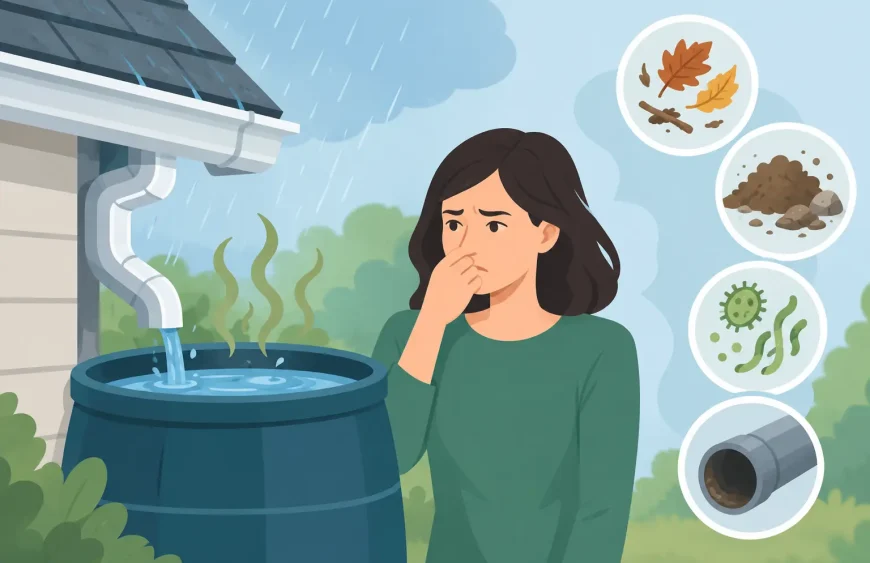
A rainwater butt that smells like rotten eggs, a stagnant pond or a damp compost heap is telling you something useful: organic material is sitting in the system for too long. If you are asking why does rainwater smell bad, the answer is rarely the rain itself. Fresh rain is usually low in odour. The smell develops after the water has washed across a roof, passed through gutters and settled in a butt, tank or pipe.
The good news is that most odours can be traced to a few practical causes and fixed without turning rainwater harvesting into another weekend-long chore. The aim is simple: keep debris out, keep water moving where possible, and make the tank easy to clean.
Why does rainwater smell bad in a water butt?
Rain picks up whatever is on its way into storage. That can include dust, pollen, bird droppings, moss, algae, leaf fragments, insects and soot. None of it needs to be visible in large amounts to cause a problem. Once it reaches a dark, still water butt, the debris starts to break down.
Bacteria feed on this material. In an oxygen-rich tank, that breakdown may produce only a mild earthy smell. In a poorly aerated tank, particularly one with a thick layer of sludge at the bottom, different bacteria take over. These can create stronger musty, swampy or sulphur-like odours.
A smell after the first rain following a dry spell is also common. Months of dust and organic matter can collect on roofing and in gutters, then wash into the butt in one concentrated flush. The first run of water is often the dirtiest.
It is worth separating a normal rain smell from stored-water odour. The earthy scent outdoors just after rainfall is often called petrichor and is harmless. Water that smells unpleasant when you open the butt lid, fill a watering can or run a hose has usually picked up contamination or gone stagnant in storage.
The smell often points to the cause
The character of the smell can help narrow down what needs attention. A damp, woodland-like smell usually suggests leaves, moss and other organic matter decomposing in the tank. A sour or rotten-egg smell points more strongly towards stagnant, low-oxygen water and anaerobic bacteria. A musty smell may come from algae, biofilm or a dirty overflow and downpipe.
A petrol, diesel, paint, solvent or chemical smell is different. Do not assume that is a normal harvesting issue. It may indicate contamination from roof runoff, nearby work, a spill, treated timber, chimney deposits or unsuitable plumbing. Stop using that water on edible crops until you have identified the source. If there is any chance of a chemical spill entering the system, empty it safely and investigate before refilling.
An occasional whiff is not always a crisis, especially in a butt used only for ornamental plants. But a persistent or worsening smell means the stored water is carrying too much material. Left alone, that build-up can block taps, foul hoses, encourage algae and make watering an unnecessarily messy job.
Common reasons a rainwater tank turns stagnant
A sealed lid is useful for keeping out light, leaves and insects, but it does not make a tank maintenance-free. The water below can still become stagnant if it sits for weeks in warm weather. Small, seldom-used butts are often more prone to this because there is little turnover.
Poor filtration is another usual culprit. A standard downpipe diverter may get water into the butt, but it does not necessarily stop fine grit, roof moss, seeds and fragments of leaf from entering. Those fine particles sink, form sludge and become fuel for bacteria.
Gutters matter as much as the tank. If they hold standing water, leaf mulch or moss, every shower washes a fresh dose of debris downstream. Check the downpipe too. A partial blockage can create a slimy, wet pocket that smells before the water even reaches the butt.
Sunlight adds another layer to the problem. Clear, translucent or poorly covered containers allow algae to grow. Algae itself can smell earthy, but when it dies and decomposes it feeds the same bacterial cycle. Heat speeds the process up, which is why a butt that was fine in spring can smell unpleasant by late summer.
Finally, look at where the water is drawn from. A tap positioned very low on a tank may pull water close to settled sediment. That does not cause the problem on its own, but it makes the smell and discolouration far more noticeable when you fill a can.
Practical fixes that actually reduce odour
Start at the roofline, not with additives poured into the butt. Removing the source of debris is cheaper and more effective than trying to mask the result once the water has gone off.
Clean gutters and clear downpipes before the wetter months, then remove obvious roof moss where it is safe to do so. You do not need a spotless roof, but you do need to stop piles of decomposing material from being washed into storage. If your property sits beneath trees, expect to check more often in autumn.
Fit a proper filter before the water enters the butt or tank. A coarse guard will catch leaves, while a finer mesh filter helps stop smaller debris that causes sludge. For rainwater harvesting systems, an accessible filter is the sensible choice. A filter that cannot be removed and rinsed soon becomes another blockage hidden in the pipework.
If the water already smells, empty the butt where practical. Remove sediment from the bottom with a scoop, wet vacuum or a controlled flush, then scrub accessible surfaces with clean water and a brush. Rinse thoroughly before reconnecting the system. Avoid tipping strong disinfectants into the garden unless you know exactly how they affect your plants, soil and drains.
Keep the lid fitted and block out light. A secure cover limits leaves, insects and sunlight, while also reducing the risk of children or animals accessing the water. Make sure the overflow has a screen too. It is easy to protect the inlet and forget that insects can enter through an open overflow pipe.
Use the water regularly. Watering borders, washing muddy tools or topping up a non-potable cleaning bucket keeps fresh rainwater moving through the system. The right use depends on how clean the collection surface is, but regular turnover is one of the simplest ways to prevent that closed-up, stale smell.
A better setup prevents repeat problems
A rainwater system does not need to be complicated, but every part should have a job. The gutter carries water, the filter removes debris, the butt stores it away from light, and the outlet lets you use it without dragging sludge into the watering can.
For a basic garden butt, a clean gutter, covered lid and inlet mesh may be enough. For a larger tank feeding hoses, irrigation or regular garden use, it makes sense to use filtration that can handle heavier runoff and be cleaned quickly. Fine mesh at the outlet can also protect a tap, pump or hose from sediment that has already made it into storage.
There is a trade-off with very fine filters: they catch more debris, but they need more frequent rinsing and can restrict flow during heavy rain if undersized. Choose a filter based on your roof area, local leaf fall and how much maintenance you are realistically willing to do. A practical system is one you can inspect, empty and clean without dismantling half the guttering.
At TMI Shop, that is the thinking behind purpose-built rainwater filtration: less debris in the tank means less sludge, fewer blocked fittings and cleaner water when you need it.
When bad-smelling rainwater needs extra caution
Stored rainwater is generally best treated as non-potable unless it has been properly treated and tested for drinking. Smell is not a reliable safety test. Water can look clear and smell fine while still carrying bacteria or contamination, particularly after bird fouling on a roof.
For watering ornamental plants, a mildly earthy smell is often more of a maintenance warning than a danger. For edible crops, especially leaves and fruit eaten raw, use care and avoid splashing stored roof water directly onto the edible parts. If water is very foul, oily, chemically scented or unusually discoloured, do not use it until the system has been cleaned and the source sorted.
The useful rule is not to chase a perfume-fresh water butt. Rainwater is outdoor water and may always have a slight natural scent. What you want is water that is free-flowing, free from heavy debris and not sitting over a layer of rotting sludge. Keep the mess out at the inlet, give the system a quick clean when required, and your rainwater store will do the practical job it was built for.


