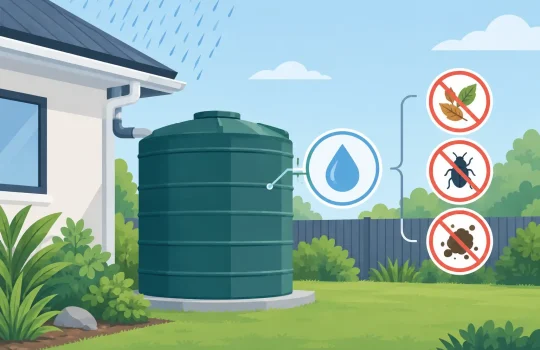
The trouble with rainwater tanks is that debris rarely arrives all at once. It builds up quietly – a few leaves from the roof, a bit of moss from the gutter, wind-blown grit, insect matter, then sludge settling at the bottom until the water you meant to store cleanly becomes harder to use. If you are wondering how to stop debris in rainwater tank setups properly, the answer is not one magic part. It is a chain of sensible barriers, fitted in the right places.
A lot of people focus on the tank itself, but by the time debris reaches the tank, you have already lost half the battle. The cleaner approach is to intercept contamination as early as possible, then stop any remaining material from reaching pumps, taps or hoses. That saves cleaning time, protects fittings and gives you more usable water with less mess.
How to stop debris in rainwater tank systems properly
Think of your system in stages: roof, gutter, downpipe, inlet, stored water and outlet. Each stage needs a practical control. Miss one, and the weak point does the damage.
At roof level, you cannot stop every twig, seed and scrap of organic matter landing on the surface. What you can do is reduce what gets washed into the gutters. Overhanging branches are one of the biggest causes of repeated contamination, especially in autumn and after windy weather. Trimming them back will not make your tank spotless, but it immediately cuts the volume of leaves and fine debris entering the system.
Gutters are the next obvious problem area. If they are already full of rotting material, every decent shower turns them into a debris delivery channel. Regular gutter clearing matters far more than many owners realise. It is not glamorous, but it is one of the cheapest ways to improve water quality before you even think about filters.
Start with the gutter, not the tank
A gutter guard can help, but it depends on your surroundings. In areas with large leaves, guards often reduce the load nicely. In areas with pine needles, blossom or fine roof grit, some guards can create a different nuisance by trapping material on top or allowing smaller debris through. That does not mean they are pointless. It means you need the right style for the debris you actually get, not the one that looks tidy in a product photo.
Downpipes are where many systems miss an easy win. A simple leaf diverter or mesh insert at the top of the downpipe can stop bulk debris before it gains speed and drops into the tank. This is especially useful if your roof regularly sheds leaves, seeds or moss. The key is access. If the screen is awkward to reach, it will not get cleaned often enough, and even a good filter becomes a blockage.
Use a first flush diverter to cut the dirtiest water
If you want a noticeable improvement in stored rainwater, fit a first flush diverter. The first water off a roof after a dry spell carries the highest load of dust, bird droppings, pollen and loose particles. Letting that initial runoff bypass the tank makes a real difference.
This is one of those practical fixes that earns its keep quickly. Instead of trying to remove every bit of contamination once it is in the tank, you prevent the worst of it entering in the first place. That reduces sludge build-up and keeps inlet filters from clogging quite so fast.
There is a trade-off. A first flush diverter does discard some harvestable water, so if you have a very small roof area or rely heavily on every litre during dry spells, you may want to size it carefully rather than fitting the biggest unit you can find. In most domestic and garden setups, though, the cleanliness gain outweighs the small water loss.
Fit proper inlet screening
Once water reaches the tank, the inlet should still be screened. This catches debris that escaped the earlier stages and stops larger matter entering storage. A decent mesh filter at the inlet is one of the most straightforward answers to how to stop debris in rainwater tank systems from becoming a maintenance headache.
Mesh size matters. Too coarse, and it lets too much through. Too fine, and it clogs quickly, especially under heavy rainfall. For many users, the best result comes from staged filtration – catching larger material upstream, then using a finer mesh closer to the tank or outlet. That spreads the workload instead of asking one filter to do everything.
If you are drawing water for irrigation, washing down, or general outdoor use, you do not need laboratory-grade filtration. You need reliable debris control that keeps pumps, taps and containers clear. Going too fine too early can create needless restriction and more cleaning than the system warrants.
Keep the tank sealed and screened
Stopping debris is not just about what comes in with rain. It is also about what gets in afterwards. A tank with a poorly fitted lid, open vent or uncovered overflow invites insects, dust and wind-blown rubbish. Once that contamination enters, it breaks down over time and adds to sediment.
A proper lid should sit securely and keep out falling debris. Vents and overflow points should be screened so they can still breathe and drain without becoming entry points for pests. This is particularly important in warmer months, when insects are active and standing water becomes more attractive.
Light control matters too. If sunlight gets into the tank, you are more likely to encourage algae growth. Algae is not the same as leaf debris, but it creates similar downstream problems – blocked filters, dirty water and more cleaning. An opaque tank or well-covered opening helps keep that under control.
Do not ignore what is already in the bottom
Even a well-set-up system will accumulate some sediment over time. Fine grit, organic matter and roof dust settle at the bottom and form sludge. If your outlet draws from too low down, or if the tank gets disturbed, that settled material ends up in your hose, pump or watering can.
A floating intake or raised outlet can make a big difference. Instead of drawing from the bottom where the muck sits, it takes water from a cleaner level below the surface. That one change often improves usable water quality more than people expect.
For tanks already carrying a fair bit of debris, cleaning out the settled sludge gives you a proper reset. There is no point fitting fresh filters to a system with years of sediment waiting to be stirred up. Depending on the tank size and access, this may be a DIY job or one worth getting help with, but either way it is part of the cure, not an optional extra.
Protect the outlet with the right final filter
If you use stored rainwater through a tap, hose or pump, the outlet is your last line of defence. This is where a practical mesh filter earns its place. It catches the bits that escaped earlier stages and stops them reaching nozzles, pressure washers, irrigation equipment or transfer containers.
For many users, this is the point where the problem becomes obvious. The water may look acceptable from above, but the moment the outlet blocks or a pump starts struggling, you know debris is travelling through the system. A purpose-built outlet mesh filter is a simple, workshop-minded fix – not glamorous, just effective.
The best setup depends on what you use the water for. If it is mainly for garden watering, a durable outlet filter may be enough. If you are feeding drip irrigation, you may need finer downstream filtration because emitters block easily. If you are filling cans or troughs, flow rate may matter more than ultra-fine screening. Practical design always starts with the job.
Maintenance is what makes the system work
Even the smartest filtration setup fails if it is neglected. Leaves rot, meshes block, diverters fill up and sediment accumulates. The aim is not to build a maintenance-free rainwater system, because that does not exist. The aim is to make maintenance quick, obvious and manageable.
That means checking gutters after storms, clearing accessible screens, inspecting the first flush diverter, and rinsing outlet filters before they become a problem. A well-designed system should let you do those jobs without dismantling half the setup. That is the difference between a clever idea and a useful one.
If you are upgrading an existing tank, start with the biggest wins first: clear the gutters, fit or improve screening before the tank, seal openings properly, then protect the outlet. Once those basics are right, you can decide whether you need finer filtration or a better intake arrangement. Brands like TMI Shop focus on this sort of practical fix for a reason – the right small component in the right place often saves far more hassle than a larger, more complicated change.
Clean rainwater storage is rarely about one dramatic upgrade. It is usually the result of several simple decisions that stop debris earlier, filter it better and keep it from reaching the parts that matter most. Get those stages working together, and your tank starts behaving like a water store instead of a compost bin with a tap on it.