A water butt is only as useful as the water you can actually draw from it. If the top of the barrel is full of leaves, moss, seeds and roof grit, you do not have stored rainwater – you have a slow-building maintenance job. That is why a proper water butt inlet filter matters. It is the part that decides whether your setup stays practical or becomes one more thing to clean out on a wet Sunday.
Most people only start thinking about filtration after the first problem. The tap blocks. The overflow backs up. The water smells stale sooner than expected. Or the butt fills with enough debris to create a sludge layer at the bottom. None of that is complicated, but it is annoying, and most of it starts where the rainwater enters.
What a water butt inlet filter is actually doing
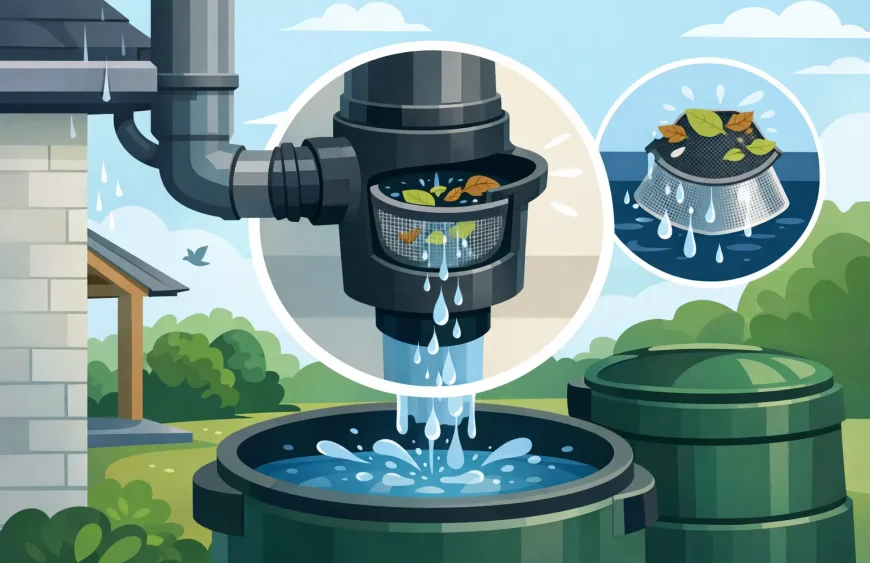
At its simplest, a water butt inlet filter sits at the entry point and catches unwanted material before it reaches stored water. That sounds obvious, but there are two jobs happening at once. First, it keeps larger debris out – leaves, twigs, moss and roof muck. Second, it helps maintain usable flow so your butt still fills properly during heavy rain.
That balance matters. A filter that catches everything but clogs in the first downpour is not much use. Equally, a wide-open inlet that lets every bit of gutter debris through is hardly filtration. The best setups deal with ordinary British weather, ordinary roofs and ordinary neglect without turning fussy.
If you collect water from a house roof, shed, garage, greenhouse or workshop, the amount of debris can vary wildly. A tiled roof under trees will behave very differently from a clean metal roof in an open garden. So when somebody asks for the best filter, the honest answer is: it depends on what is coming off the roof, how often you are willing to clean it, and how fast the water needs to move.
Why cheap or improvised filters often disappoint
A lot of water butts end up with makeshift filtration. People stretch mesh over the opening, wedge in plastic guards, or rely on whatever came in the box with the butt years ago. Sometimes that works for a while. Often it works just long enough to look like a good idea.
The usual problem is that improvised filters are not designed around flow and maintenance. Fine mesh can block quickly with wet leaves and pollen. Loose covers shift out of place. Brittle plastics crack under sun exposure. And awkward fittings make cleaning such a nuisance that it gets put off until something overflows.
This is where practical design earns its keep. A proper filter should be easy to inspect, easy to remove, and sturdy enough to stay put. If a part needs hands, tools, balancing on a step ladder and a fair bit of patience every time it needs clearing, it is not solving much.
Choosing a water butt inlet filter for real conditions
The right choice starts with the source of the water, not the barrel itself. If your gutters collect a lot of leaves, then a coarse first-stage filter is often the sensible option. It catches the obvious debris while keeping flow high. If your main issue is finer material such as moss fragments or grit from an older roof, you may need a tighter mesh, but that comes with more frequent cleaning.
There is always a trade-off between filtration and flow. Finer mesh improves cleanliness but tends to block faster. Coarser mesh keeps things moving but lets more small material into the butt. For many domestic setups, especially in gardens and smallholdings, the best result comes from filtering out the worst of the debris at the inlet and accepting that very fine sediment may still need occasional cleaning from the base.
Shape matters too. Flat mesh laid horizontally can mat over with wet leaves surprisingly fast. Angled or shaped filters often shed debris better, especially during heavy rain when water pressure helps wash material aside. A design that directs overflow cleanly is also worth having, because blocked inflow during a downpour can send water where you least want it.
Material quality is not glamorous, but it matters. Outdoor filtration parts live through rain, frost, UV exposure and temperature swings. Thin plastic and weak mesh tend to fail at the points that are hardest to notice until there is a problem – split edges, warped frames, loose fixing points. A dependable inlet filter should feel like a workshop solution, not a packaging extra.
Where the filter should sit
A water butt inlet filter can sit directly over the butt opening, within a diverter from the downpipe, or as part of a dedicated rainwater entry fitting. Each approach has its place.
Filtering at the butt opening is straightforward and easy to understand. You can see it, clean it and replace it quickly. It suits many simple garden systems. The drawback is that by the time water reaches the butt, debris has already travelled through the downpipe.
A diverter-mounted filter deals with debris earlier in the route. That can reduce blockages lower down and keep the overall system tidier. But if the diverter is awkwardly positioned, maintenance can become a chore. Any filter that is technically effective but practically inaccessible tends to get ignored.
For larger setups, especially where clean stored water matters more, a more purpose-built inlet arrangement is often the better route. That gives you control over entry angle, mesh type and cleaning access. If you are filling from a workshop roof, a greenhouse run, or a system that sees plenty of runoff, that extra control usually pays off.
Common mistakes that cause dirty water or poor filling
One of the biggest mistakes is assuming the filter alone will solve everything. If your gutters are full of sludge or your downpipe carries years of moss, the inlet filter is dealing with too much before it has even started. Basic gutter cleaning still matters.
Another mistake is choosing the finest mesh available because cleaner sounds better. In practice, an over-fine filter can starve the butt of flow during heavy rain, which defeats the point of harvesting water in the first place. You want enough filtration to stop nuisance debris, not so much restriction that the water goes elsewhere.
Poor fitting is another culprit. Gaps around the edge let debris bypass the mesh entirely. Loose covers can lift in wind or shift during cleaning. If the filter does not match the opening properly, performance becomes inconsistent. Purpose-built parts usually win here because they are designed to sit securely without guesswork.
Then there is simple neglect. Even a good water butt inlet filter needs checking, especially in autumn and after storms. The advantage of a good design is not that it never needs attention. It is that attention takes a minute rather than half an hour.
What to look for if you want less maintenance
If your main goal is to keep fuss to a minimum, focus on three things: sensible mesh size, easy removal, and a design that sheds debris rather than collecting it in a soggy layer.
A slightly coarser filter that keeps leaves and larger muck out may give you a better real-world result than a fine filter that blocks every week. If you use water mainly for the garden, washing tools, or general outdoor jobs, that is usually the practical choice. If the water is for more sensitive uses, you can always add later-stage filtration downstream.
Look for a filter that can be lifted out, rinsed and put back without wrestling with clips or fragile plastic tabs. If you have ever dealt with muddy runoff while standing on a ladder, you will know why this matters.
It also helps to think seasonally. A setup that performs brilliantly in June may struggle in October under falling leaves. If your property sits near trees, build around autumn, not summer. That is the honest test.
Is a water butt inlet filter worth upgrading?
If your current setup lets debris through, fills slowly, or needs constant clearing, then yes, upgrading is usually worth it. The gains are not flashy, but they are useful. Cleaner stored water. Fewer blocked taps. Less sludge in the barrel. Less time poking around in grim water with a stick.
For practical buyers, that is the whole point. A good filter does not need big claims. It just needs to stop a recurring annoyance from recurring. That is very much the thinking behind well-made specialist accessories – solve the problem properly, and the rest of the system becomes easier to live with.
At TMI Shop, that sort of problem-solving is the standard worth aiming for. Not because filtration is complicated, but because bad design makes simple jobs harder than they need to be.
If you are setting up or improving rainwater collection, do not treat the inlet as an afterthought. The smartest water butt is the one that still works cleanly after weeks of weather, leaves and neglect – and that starts with a filter designed for real use, not just a tidy photo.