A fitting that takes two extra minutes to undo does not sound like much – until you are changing hoses with diesel on your gloves, swapping a rainwater line, or trying to stop a container from dripping in the back of a van. The choice between camlock versus threaded connectors affects the speed, cleanliness and reliability of every liquid-transfer job. Neither fitting is automatically better. The useful question is which one suits the way your equipment is actually used.
For a fixed connection that may not be touched for months, a threaded fitting can be simple and dependable. For a hose that is connected and disconnected repeatedly, a camlock can save a surprising amount of time and frustration. Getting it right means looking beyond the outlet size and considering the liquid, pressure, seal, material and how often the connection changes.
How Camlock Connectors Work
Camlock couplings, also called cam and groove couplings, are built for quick joining and release. One half has cam arms, while the matching half has a groove. Push the two parts together, close both arms, and the arms pull the coupling tight against its gasket.
That action is why camlocks are popular on transfer hoses, pumps, IBCs, tanks and temporary pipe runs. There is no lengthy winding-on process and no need to keep turning a hose round and round. A properly matched camlock pair can usually be connected in seconds, even when the hose is awkward, heavy or already fitted to equipment.
The gasket does much of the sealing work. It must suit the liquid being transferred. A gasket that is fine for water may not be the right choice for diesel, biodiesel, oils, chemicals or hot liquids. The same applies to the coupling body: polypropylene, aluminium, stainless steel and brass all have different strengths, compatibility limits and costs.
Camlocks are not magic fittings. The arms need to be fully closed, the gasket needs to be present and in good condition, and both halves must be the same nominal size and compatible style. A damaged gasket or worn cam arm can turn a quick-connect system into a drip point.
How Threaded Connectors Work
Threaded connectors use a male and female thread to make the joint. In the UK, BSP threads are common on tanks, taps, pumps and plumbing components, but not every BSP connection seals in the same way. A tapered thread may seal as it tightens, while a parallel thread often relies on a washer, O-ring or bonded seal against a flat face.
This is where people often waste time and money. A fitting may screw together neatly yet still leak because the thread type is wrong, the sealing face is missing a washer, or the thread has been overtightened and damaged. Thread tape and thread sealant have their place, but they are not a substitute for matching the right fitting to the right thread.
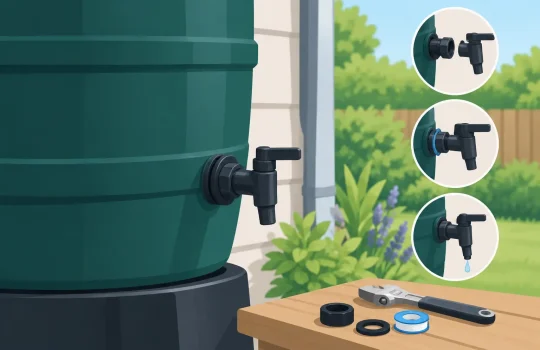
Threaded fittings suit permanent or semi-permanent installations well. A tap screwed into a water butt, an adaptor fitted to a pump, or a pipe connection tucked away in a workshop does not need quick release every day. Once correctly assembled, a threaded connection is compact, inexpensive and unlikely to be opened by accident.
The drawback appears when hoses are swapped frequently. Every change involves several turns, and a stiff hose can fight you all the way. Cross-threading is also a real risk, particularly with plastic tank outlets and fittings started at an angle.
Camlock Versus Threaded Connectors in Daily Use
Speed matters when hoses move often
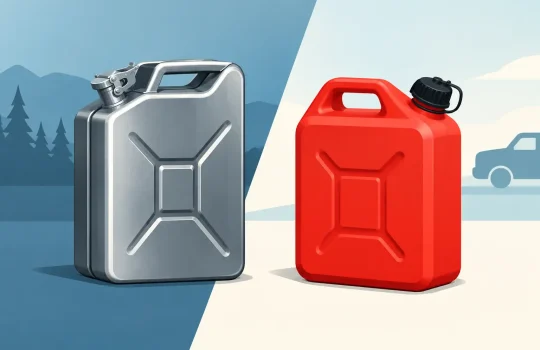
If you transfer fuel between containers, empty rainwater tanks, change pump hoses or use one hose across several jobs, camlocks are usually the more practical option. They are designed for repeat connection without tools. The hose stays still while the cam arms do the tightening, which is a major advantage in confined spaces.
Threaded connectors make more sense when the connection is mostly left alone. There is little value in paying for a quick-release coupling on a joint you might undo once a year. A good threaded fitting is a sensible, no-nonsense answer for fixed plumbing.
Sealing depends on the fitting design, not just the name
A camlock seals through its gasket under pressure from the closed arms. A threaded fitting seals through the thread form, a washer or an O-ring, depending on its design. Both can be leak-free. Both can leak when assembled carelessly.
Camlocks are easier to inspect before use. You can see whether the gasket is fitted, whether the faces are clean and whether both arms are shut. Threaded joints can hide problems until liquid reaches them, especially if a fitting has been tightened onto the wrong thread or a seal has been omitted.
For low-pressure gravity feed, either arrangement can work well. At higher pressure, use components rated for the application and never assume that a similar-looking fitting is suitable. Pressure, pulsation from pumps and hose movement all put extra demand on couplings and seals.
Threads are better protected when they are not repeatedly used
Plastic threads on IBC outlets, water butts and storage tanks are useful but vulnerable. Repeatedly removing and refitting a hose directly to them can wear the threads or eventually strip them. A practical arrangement is often to fit a threaded adaptor once, then use a camlock at the point where the hose is connected.
This gives you the best of both systems: the threaded connection remains fixed and protected, while the working hose can be removed quickly. It also makes cleaning, draining and storing the hose much easier.
Dirt has different consequences
Mud, grit and swarf are bad news for both connector types. On a threaded joint, debris can damage the thread, stop the fitting seating properly or contaminate the line. On a camlock, grit caught on the gasket or sealing face can cause a small but persistent leak.
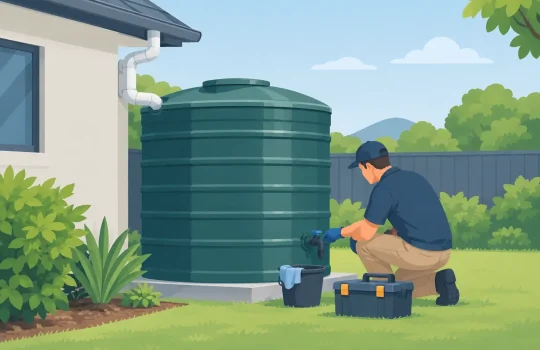
For rainwater harvesting, stored water and any transfer setup left outdoors, keep protective caps on disconnected fittings. If the liquid is going into equipment that dislikes debris, fit filtration before the pump or outlet rather than hoping the connector will keep everything clean. A clean connection is not the same as a filtered system.
Choose the Connector Around the Job
A thread is usually the right starting point where you are joining to a tank outlet, pump port, valve or fixed pipework. It is compact and widely available, and it creates a stable base for the rest of the system. Check the actual thread specification before ordering, particularly where BSP, metric and other sizes can be confused.
A camlock is usually the better working connection where a hose needs to come on and off regularly. This applies to a mobile fuel-transfer setup, a garden pump used in more than one place, a temporary tank-to-tank transfer line, or a washdown hose that is stored between uses.
Material choice should follow the fluid, not appearance. For example, a fitting that sees only clean water has different demands from one used with fuel or biodiesel. Confirm compatibility for the coupling body, hose and gasket together. One unsuitable seal can undo the benefit of an otherwise well-chosen system.
At TMI Shop, that is the sort of practical detail behind smart fluid solutions: the right adaptor and hose arrangement should reduce spills and faff, not create another problem to work around.
Avoid the Fitting Mistakes That Cause Leaks
Do not force a thread because it feels close. Start it by hand, keep it square, and stop if it binds early. A damaged plastic outlet is far more expensive and inconvenient than checking the specification first.
Do not use thread tape on every threaded joint by habit. A parallel thread that seals on a washer needs that washer in good condition; tape on the thread may not solve the real issue. Equally, do not overtighten a camlock by trying to add leverage to the arms. If it will not close properly, inspect the gasket, fitting size and alignment.
Before disconnecting either type, stop the flow and release pressure. A fitting can be perfectly sound yet still make a mess if it is opened with liquid trapped in the hose. Keep a container or absorbent cloth nearby when working with fuel, oil or dirty water, and replace seals before they become the weak point.
Build for the Jobs You Actually Do
The most useful fluid setup is rarely made from one connector type alone. Threaded fittings provide a secure, sensible interface at tanks and equipment. Camlocks add speed where hoses need to be changed. Used together, they can turn an awkward collection of containers, pumps and pipes into a system that is cleaner to use and quicker to pack away.
Choose the fitting that removes the annoyance you meet most often. If it is a hose that is forever being screwed on and off, camlocks earn their place. If it is a connection you want to fit once and forget, a correctly sealed thread is hard to beat.