An IBC can hold a thousand litres of useful water, but the outlet is where a clean store can quickly become a messy job. A loose cap, damaged valve, open fitting or poorly chosen filter can let in grit, insects and organic debris, or leave you with a blocked hose just when you need water. This guide to IBC outlet protection focuses on the practical details that keep stored liquid usable and transfer jobs cleaner.
For rainwater harvesting, garden use, workshop cleaning and non-potable washdown, protecting the outlet is not an optional finishing touch. It is the part that controls what leaves the tank, what can enter it, and whether the valve will still work properly after a wet winter or a busy season.
What IBC outlet protection actually means
Outlet protection is not one single component. It is the combination of measures that keep an IBC valve, outlet thread and connected transfer equipment clean, intact and fit for purpose. Depending on your setup, that may include a protective cap, a mesh filter, a sealed hose connection, physical protection from knocks, and sensible positioning of the tank.
The right approach depends on what is stored inside and how you use it. A rainwater IBC feeding a watering can has different needs from a tank supplying a pressure pump, a diesel transfer arrangement or a temporary site washdown point. The common aim is simple: stop contamination and damage before they turn into wasted water, a failed pump or a spill around the base of the tank.
There are two problems people often confuse. The first is debris getting into the tank through an uncovered outlet or disconnected fitting. The second is debris already in the tank travelling towards the valve and into a hose, pump or tap. A cap helps with the first. A correctly fitted outlet mesh filter helps with the second. In many working setups, both are worthwhile.
Start with the liquid and the job
Before buying any outlet protection, be clear about the liquid, the flow rate and the equipment downstream. This saves money compared with forcing a generic fitting to do a specialist job.
For harvested rainwater, the concern is usually leaf fragments, roof grit, insects, sediment and algae. A coarse mesh at the outlet can catch larger debris before it reaches a hose or pump, while good filtration at the tank inlet reduces the amount that reaches the bottom in the first place. Outlet filtration is a useful second line of defence, not a substitute for keeping the water collection system clean.
For fuels, biodiesel, oils, chemicals or any liquid intended for consumption, compatibility and hygiene matter far more. Do not assume a fitting, seal or mesh that works with water is suitable for fuel, solvent or food use. Check the material specification for the liquid involved, and follow the relevant handling, storage and safety guidance. An IBC previously used for chemicals should never be casually repurposed for water, animal use or food-related jobs.
Flow also matters. Fine mesh catches smaller particles but can slow the transfer rate and block sooner. Coarser mesh lets liquid move freely but will not stop fine sediment. If you are gravity-feeding a hose for garden watering, a simple coarse filter may be exactly right. If you are protecting a pump or a narrow nozzle, you may need staged filtration: a coarse outlet screen followed by a filter designed for the pump or application.
Check your IBC outlet before choosing a fitting
IBC fittings look similar until they do not fit. The most common outlet connection is the S60x6 buttress thread, often called a 60 mm IBC thread, but there are variations. Measure the outlet and identify the valve before ordering accessories. A fitting that is nearly right can cross-thread, leak or leave you with an unreliable connection.
Look closely at the condition of the valve as well. The plastic valve body should not be cracked, distorted or excessively stiff. The outlet thread should be clean and undamaged, and the valve should shut off fully before you remove any existing cap. If the valve weeps when closed, adding a hose or filter will not cure the underlying fault.
A sound base matters too. An IBC should stand level on firm ground or a properly built support. If the pallet is sinking into soft soil, the frame is twisted or the tank is being knocked by a wheelbarrow, mower or vehicle, stress can travel straight to the outlet valve. A cheap cap is no defence against a thousand-litre tank shifting under load.
Use caps, filters and hose connections for their proper roles
A blanking cap gives basic protection when the outlet is not in use. It keeps rainwater, dust, spiders and accidental knocks away from the thread and valve opening. It is particularly useful on a tank that is emptied only occasionally, or where a hose is removed after each use. Keep the cap clean before refitting it. There is little value in sealing dirt against the outlet.
An outlet mesh filter is designed to sit in the flow path and stop debris leaving the IBC. It is a practical answer where rainwater tanks collect small fragments of leaf, moss or roof sediment that can otherwise clog a spray gun, drip line, pump strainer or narrow hose fitting. The filter needs to be accessible, because any mesh doing its job will eventually need cleaning.
A hose adaptor should create a secure, leak-free transition from the IBC valve to the hose size you actually use. Avoid improvising with mismatched thread tape, stretched rubber or hose pushed over a connection that was never designed for it. It may hold for one fill, then fail when the hose is tugged or the water pressure changes.
Where a hose stays permanently connected, support its weight. A long hose full of water can pull down on the outlet, especially if it is dragged across a yard or caught under a gate. Route it so it leaves the tank without a sharp bend, and use a proper isolation point further along the run if you need regular control at the far end.
Fit outlet protection without creating a leak
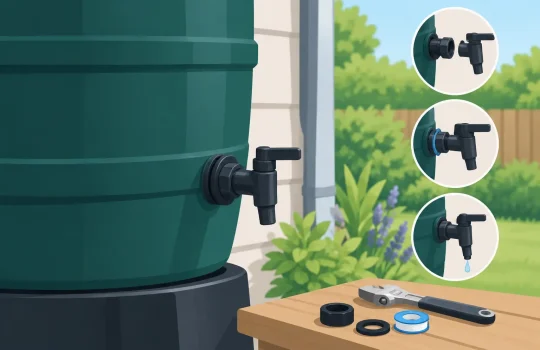
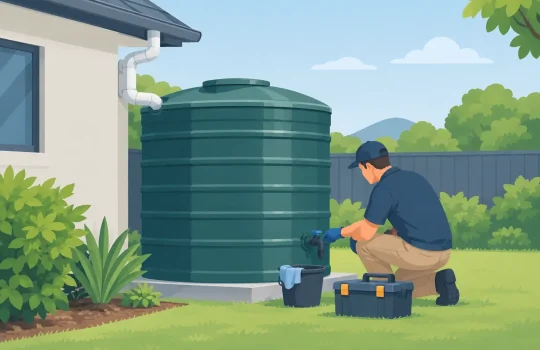
First, close the IBC valve fully and place a bucket or tray beneath the outlet. Even a closed valve can hold a small amount of water in the connection. Clean the outlet thread and sealing face with a cloth, removing grit that could damage the thread or prevent a proper seal.
Fit the filter, adaptor or cap squarely by hand. It should turn smoothly. If it binds early, stop and check the thread type rather than applying more force. Cross-threaded plastic is difficult to rescue and tends to leak at the worst possible time.
Tighten only as much as needed to compress the seal. Over-tightening can distort plastic threads, flatten a washer too far or make later removal needlessly difficult. Once fitted, open the valve gradually and inspect the connection. A slow seep is still a leak. Shut off, release the pressure and correct the seal before leaving the tank unattended.
For a new rainwater setup, test with a small controlled draw before connecting a pump or filling containers. Watch how the flow behaves, check whether the mesh restricts it, and see whether sediment appears. This ten-minute test can prevent a much longer clear-up later.
Keep the system clean enough to work
An outlet filter is not a fit-and-forget item. How often it needs attention depends on the water source, weather, tank position and how much liquid you draw. Tanks collecting from a leafy roof will need more frequent checks during autumn. A tank supplied by a clean, covered source may need very little attention.
A sensible routine is to inspect the outlet after heavy rainfall, before a long period of use, and whenever flow noticeably drops. Remove the filter only with the valve closed, rinse away trapped debris and check that the mesh has not torn or become misshapen. Do not poke holes through a blocked mesh to get the job done. That turns a filter into an unpredictable restriction and lets debris through where you least want it.
It is also worth looking inside the IBC from time to time, where this can be done safely. Sediment at the bottom is common with harvested rainwater. If it is building up, improve the gutter guard or inlet filtration and consider cleaning the tank when practical. Repeatedly cleaning the outlet alone treats the symptom rather than the source.
Common mistakes that cause messy IBC jobs
The usual failures are rarely complicated. People leave the outlet uncapped after disconnecting a hose, fit the wrong thread adaptor, choose mesh that is too fine for gravity flow, or allow a heavy hose to hang from the valve. Each creates a small frustration that can become a blocked pump, a leaking tank or a wasted afternoon.
Another mistake is treating every IBC as a water tank. The container’s previous contents, the seals in the valve and the material of every fitting all matter. Use purpose-suited equipment, label tanks clearly, and keep incompatible liquids and accessories separate. Practical protection starts with knowing exactly what your system is carrying.
TMI Shop designs workshop-minded accessories for jobs where standard fittings create more trouble than they solve. The best outlet setup is not the one with the most parts. It is the one that matches your tank thread, protects your downstream equipment and stays simple enough to clean and use without a fight.
A clean outlet, a sound valve and a filter you can inspect easily will do more for your IBC than a cupboard full of improvised adaptors. Set it up properly once, then let the tank get on with the useful work.