A water butt can fill surprisingly quickly in a proper British downpour – along with everything that has landed on the roof since the last one. Leaves, moss, grit, insects, bird mess and fragments of roofing material all travel towards the downpipe. Knowing how to strain roof runoff properly means stopping that debris before it turns your stored water into a smelly, blocked-up nuisance.
The useful approach is not to fit the finest mesh you can find and hope for the best. Fine mesh catches more dirt, but it also blocks sooner. A good rainwater setup uses filtration in stages, puts each filter where it can be cleaned easily, and always gives excess water somewhere safe to go when the screen clogs or the tank is full.
Start with the debris your roof actually produces
Look in the gutter after a few weeks rather than guessing. A house beneath oak trees needs a different setup from a shed with a clean metal roof. Large leaves and twigs are best stopped early. Fine roof grit, moss and airborne dust need a finer screen closer to the storage tank.
Most domestic roofs produce a mix of coarse and fine debris. The coarse material is what causes immediate blockages in gutters and downpipes. The finer material settles at the bottom of a water butt, eventually reducing capacity and making cleaning unpleasant. Straining roof runoff is therefore about protecting both water flow and water quality.
If your roof is heavily moss-covered, deal with the moss first. No filter will stay clear for long if every rainfall washes a fresh clump of moss into the gutter. Likewise, repair damaged felt, crumbling mortar or loose roofing before relying on harvested water for anything important. Filters are there to catch normal debris, not compensate for a roof in poor condition.
Use filtration in stages, not one overly fine filter
A practical system normally has three points of defence: gutter protection, a downpipe or rainwater diverter filter, and a final inlet screen at the water butt, barrel or tank. You may not need all three on a clean roof with no nearby trees, but each stage has a job.
Keep the gutter clear first
A gutter guard, leaf basket or coarse gutter mesh catches the big stuff before it can reach the downpipe. This reduces the amount of cleaning needed further down the system and helps prevent overflowing gutters. Choose a design that can be lifted out or brushed clean without dismantling half the guttering.
There is a trade-off here. Fine gutter mesh can stop small leaves and pine needles, but it may mat over with moss and become harder to maintain than an open gutter. For many properties, a coarser guard combined with regular gutter cleaning is the less frustrating option.
Fit a filter where water enters the storage system
The best place for more controlled filtration is usually at the rainwater diverter or where the downpipe feeds the tank. This is where a removable mesh filter can catch leaves, seed pods, insects and larger sediment before they enter the stored water.
For water being used on the garden, a medium mesh is often the sensible choice. It catches the muck that blocks taps and watering cans while allowing strong rainfall to pass through. Very fine mesh is more suitable where you are trying to exclude smaller particles, but it needs more frequent attention and a larger surface area to avoid restricting flow.
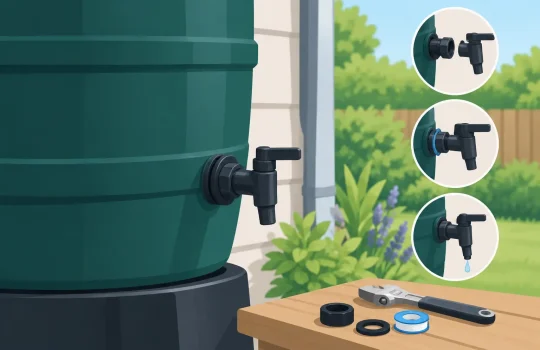
Purpose-made outlet mesh filters are useful on larger tanks, IBCs and improvised storage systems because they prevent debris from reaching the outlet fitting. That matters when you are filling watering cans, feeding a hose or using a small transfer pump. A blocked outlet is always more annoying to fix when the tank is full.
Add an inlet screen for the final catch
A removable screen beneath the inlet is a simple final safeguard, particularly on open-top barrels and larger tanks. It should sit securely, be easy to lift out and have enough area that water can still enter during heavy rain.
Avoid stretching a tiny piece of fine mesh across a narrow inlet. It may work during light rain, then overflow when you need the collection most. A larger basket-shaped filter or wide filter surface spreads the flow and gives debris more room to collect before maintenance is needed.
Choose the right mesh size for the job
There is no magic mesh size for every roof. The right choice depends on debris, roof area, rainfall intensity and what you intend to do with the water.
Coarse screening is best for leaves, twigs and obvious roof debris. It keeps the system flowing and requires less cleaning. Medium screening is a strong all-round option for garden rainwater harvesting, as it reduces sediment without becoming overly restrictive. Fine screening catches more grit and organic matter, but needs regular cleaning and should be sized generously.
If you are collecting water only for plants, washing paths or general outdoor cleaning, do not over-engineer the filter. Clean-looking water is useful, but it is not drinking water. For any use involving people, food preparation, drinking, or washing where potable-quality water is expected, roof runoff needs treatment well beyond a mesh filter. Basic straining removes solids. It does not remove dissolved contaminants, microbes or pollution washed from the roof.
Build in overflow before the first downpour
Every rainwater collection system needs a safe overflow route. This is not optional. A screen can clog, a water butt can fill, and a sudden summer storm can overwhelm a setup that handles ordinary rainfall perfectly well.
Make sure excess water can continue down the original drainage route, discharge to a suitable soakaway, or move safely away from the building. Never allow a blocked filter to force water back over the gutter, against brickwork, or around foundations.
A diverter with an automatic overflow path is often the neatest option for a water butt. For larger tanks, plan the overflow pipe before connecting the inlet. It should be at least capable of handling the expected incoming flow and should not create a trip hazard or wash out soil beside the wall.
Make cleaning quick enough that you will actually do it
A filter is only useful while it is clear. The biggest design mistake is putting the screen somewhere awkward, then expecting it to receive weekly attention. Put removable filters at a comfortable height where possible, use clips or lids that can be opened without tools, and leave space to remove the collected debris.
During autumn, inspect the system every week or two if there are trees nearby. In winter and spring, check after high winds or prolonged rain. In drier months, a quick look before a forecast downpour can prevent an avoidable overflow.
When cleaning, empty the basket or screen into compost or garden waste, rinse it with a hose, and check that water is flowing through the downpipe. If sediment has collected in the bottom of the butt or tank, drain and rinse it periodically before it reaches the outlet. A raised water butt stand can help keep the outlet above the worst of the settled silt, although it does not replace cleaning.
Common mistakes when straining roof runoff
The first is using household fabric, foam or kitchen strainers as permanent filters. They may catch debris briefly, but they clog rapidly, degrade outdoors and can create a stagnant mess. Use UV-stable, weather-resistant mesh or a purpose-built rainwater filter instead.
The second is forgetting access. A perfectly filtered tank is no use if you cannot remove the filter or clean the inside. The third is fitting a filter after the water has already passed through a dirty downpipe. If the downpipe is full of old leaf mulch, clean it before judging whether your new filter works.
Finally, do not seal a storage tank so tightly that it cannot vent, or leave it open enough for mosquitoes, dirt and light to enter. A covered, vented tank with screened openings keeps stored water cleaner and reduces algae growth.
A practical setup that keeps working
For most homes, sheds and garden workshops, the dependable answer is simple: keep the gutter reasonably clear, use a removable filter at the diverter or tank inlet, fit a screen that is large enough for heavy rain, and provide a proper overflow. That combination saves time, protects taps and hoses, and keeps the water useful for longer.
At TMI Shop, the Mad Approach to Practical Design starts with the awkward jobs people are tired of fighting. Roof runoff is one of them. Choose filtration that suits your roof, make it easy to clean, and your next downpour can fill the tank rather than fill it with trouble.