A diesel can that glugs, a hose that kinks halfway through a refill, a cap that never quite seals properly – this is how a quick job turns into diesel on your gloves, the floor and the side of the machine. The right diesel transfer accessories are not fancy extras. They are the small, hard-working parts that make fuel handling quicker, cleaner and a lot less irritating.
If you regularly fill plant, generators, heaters, tractors, vans or workshop equipment, you already know the problem. Generic fittings are often close enough to tempt you, but not right enough to trust. A loose thread, poor flow, awkward pouring angle or lack of filtration soon costs time, fuel and patience. A mad approach to practical design starts with fixing those exact annoyances.
What counts as diesel transfer accessories?
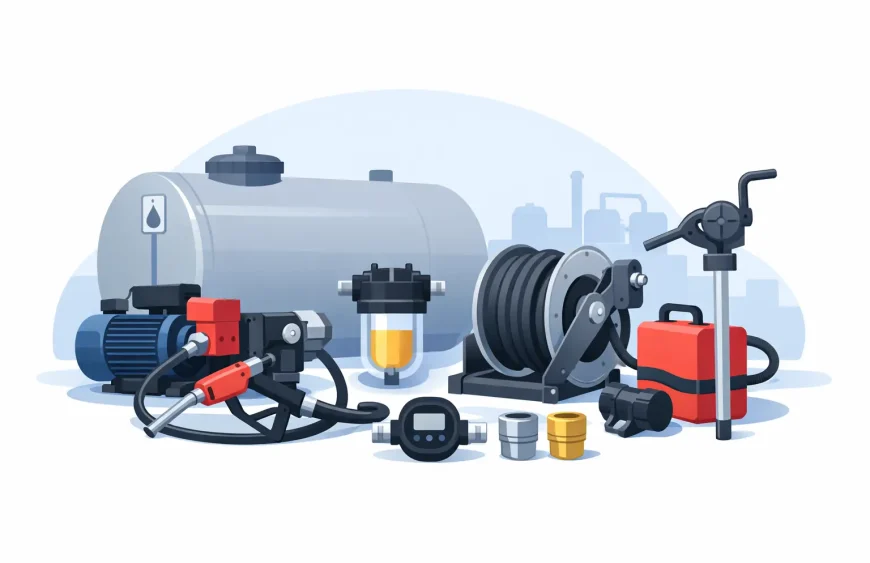
The category is broader than many people expect. It includes the obvious pieces such as hoses, spouts and nozzles, but it also covers the fittings and filters that stop a simple transfer becoming a messy workaround.
In practical terms, diesel transfer accessories are the add-ons and connection parts that help move fuel from one container or tank to another with better control. That can mean a flexible spout for a jerry can, a biodiesel-safe fitting, a mesh filter for catching debris before it reaches equipment, or a hose arrangement that suits the space you actually work in rather than the one imagined by a generic catalogue.
For most buyers, the job is not just moving liquid from A to B. It is doing it without splashing diesel over paintwork, introducing dirt into a tank, straining your wrist at an awkward angle or wasting ten minutes wrestling with a poor fit.
Why the small parts matter more than the main container
People often focus on the can, drum or tank and treat the accessory as an afterthought. In real use, the accessory usually decides whether the transfer is clean or clumsy.
Take a basic fuel can. If the spout is too short, too rigid or badly vented, the pour becomes uneven. If the cap is fiddly, you waste time every time you refill. If the outlet fitting is poor quality, drips start before the fuel even reaches the target. The container may hold the diesel, but the accessory controls the job.
The same goes for filtration. Diesel is less forgiving than many people assume. Dust, flakes, rust particles and workshop debris do not need to be dramatic to cause trouble. Fine contamination can lead to blocked systems, poor running and avoidable wear. A simple filter or mesh arrangement will not solve every fuel-quality issue, but it can stop obvious rubbish getting where it should not.
Choosing diesel transfer accessories for the job
There is no single best setup because the right choice depends on how often you transfer fuel, what you fill and where you do it.
If you are topping up machinery outdoors, you may need a spout with better reach and controlled flow. If you are moving diesel in a van or workshop, secure caps and reliable seals matter more because movement exposes weak fittings quickly. If you use biodiesel blends, material compatibility becomes a serious point, not a footnote.
This is where trade-offs come in. A wide-bore hose can speed up transfer, but it may be harder to control for smaller tanks. A very flexible spout can help with awkward access, but only if the connection stays firm under load. A fine filter catches more debris, but flow rate can drop if it is too restrictive for the job. Good accessories solve the actual frustration in front of you rather than chasing a spec sheet.
Spouts and pouring attachments
For many users, the biggest improvement comes from a better spout. A poor spout causes splashing, glugging and overpouring. A well-designed one gives you reach, control and less clean-up afterwards.
The details matter. Thread compatibility needs to be right, not almost right. The angle needs to suit the fill point. Venting needs to let fuel flow smoothly instead of surging. If you switch between different cans or tanks, modularity can matter too. One good spout that fits properly is worth more than a box full of improvised adapters.
Hoses and fittings
Hoses are simple until they are not. Too stiff and they fight you. Too soft and they collapse or twist. Too short and you end up lifting more weight than necessary. Too long and they become awkward to store and slow to drain.
Fittings deserve the same scrutiny. Diesel transfer jobs often fail at the join. Threads strip, seals perish, adapters wobble and suddenly every refill includes a drip tray and a rag. Purpose-built fittings save time because they remove the need to bodge one connector into another. That matters in workshops, on farms and in mobile setups where reliability beats improvisation every time.
Filters and strainers
If your diesel comes from stored containers, drums or intermediate bulk containers, filtration is a sensible step. This is especially true where containers are reused or sit for long periods. Sediment and general debris have a habit of appearing when you least want them.
A mesh filter is often a practical first line of defence. It will not replace proper fuel management, but it can catch visible contamination before it reaches engines or heaters. For many users, that is enough to prevent the most common and frustrating problems. The key is matching the filter to the outlet and flow you need rather than fitting something so restrictive that people stop using it.
Where generic accessories usually let people down
Cheap, mass-market transfer parts often look acceptable in the packet. The trouble shows up in use.
One common issue is poor fit. Threads may technically match but still feel loose, or seals may sit badly and start weeping after a short time. Another is material quality. Plastics can feel brittle, caps can fatigue, and flexible parts can harden or distort faster than they should. That is before you get to the basic design faults such as awkward grip shapes, poor pouring angles or fittings that are a nuisance to clean.
For practical buyers, the real cost is not just replacing the part. It is diesel lost to spills, time wasted adapting things and the nuisance of a refill job that never works first time. That is why specialist, workshop-minded design matters. It is not about making an accessory look clever. It is about making it behave properly under real hands-on use.
Diesel transfer accessories and biodiesel compatibility
This is one area where assumptions can get expensive. Not every seal, hose or fitting that handles standard diesel will cope equally well with biodiesel blends. Some materials swell, degrade or lose performance over time.
If you use biodiesel, or even switch between fuel types, accessory materials are worth checking carefully. Compatibility is not a glamourous feature, but it is one of the most practical. A fitting that survives repeated use with the fuels you actually handle is more valuable than a cheaper part that starts failing quietly after a few months.
Storage and organisation are part of the transfer job
A transfer accessory is only useful if it is where you need it and still clean when you reach for it. In workshops, vans and garages, loose hoses and spouts quickly become dirty, damaged or misplaced.
Good storage does two things. It protects the accessory from knocks and contamination, and it makes the next job faster. That might sound obvious, but the number of filling setups let down by poor storage is remarkable. A practical holder, a dedicated place for caps and a way to keep used fittings off the floor can make the whole setup more dependable.
This is often ignored because it feels secondary. It is not. Organisation is part of spill prevention. A clean, easy-to-grab accessory is more likely to be used properly than one buried under odds and ends in the back of a van.
What to look for before you buy
When comparing diesel transfer accessories, start with the problem that annoys you most. Is it spills, slow flow, dirty fuel, poor fit or awkward storage? Buy for that first.
Then check the unglamorous details. Material compatibility, thread type, sealing quality, outlet size, hose length and how the part will actually be handled all matter more than broad claims. If an accessory saves a minute, reduces clean-up and stops even a small amount of wasted diesel, it soon earns its place.
This is also where British-made, inventor-led products can stand out. A small specialist maker such as TMI Shop is not trying to fill a catalogue with generic parts. The point is to solve the annoying real-world jobs that off-the-shelf accessories often ignore.
The best diesel transfer accessories do not ask for praise. They simply stop the usual nonsense – the splashing, the fiddling, the makeshift adapters and the fuel where it should never have gone. Buy the pieces that match your setup, your fuel and your working habits, and every refill becomes a cleaner, calmer job.