A hose connection only gets attention when it fails: water dribbling down a wall, fuel running over a container, a keg line pulling loose, or a rainwater setup sucking in debris. The best hose connectors are not simply the shiniest fittings on the shelf. They are the ones that match the liquid, pressure, hose size and job properly – then keep doing so without constant tightening, adapting or mopping up.
For practical users, the aim is straightforward: a clean transfer, a secure fit and less wasted time. Choosing well starts by ignoring vague labels such as “universal” and looking closely at what your setup actually needs.
What makes a hose connector fit for the job?
A connector has one job: create a dependable join between a hose and another part of the system. That other part could be a tap, pump, drum, IBC outlet, filter, keg coupler or nozzle. The details matter because a fitting that works perfectly on a low-pressure garden hose may be a poor choice for fuel transfer or a pressurised water line.
Start with the hose itself. Measure its internal diameter rather than guessing from the outside. A hose tail needs to suit the bore of the hose, otherwise it will either be impossible to fit, loose enough to leak or so stretched that the hose eventually splits. Common sizes are often quoted in millimetres or inches, so check both before ordering parts.
Then identify the fitting at the other end. Threads are a regular source of frustration. BSP threads are widely used in the UK, but thread size, gender and sealing method still need to match. A threaded connector may seal on a washer, an O-ring or the thread itself. Forcing together two parts that look similar is a good way to cross-thread plastic, damage a seal and create a leak that no amount of PTFE tape will properly cure.
Pressure and movement matter too. A static rainwater overflow pipe puts little strain on its fitting. A hose dragged around a workshop, van or smallholding needs a connector that will not snag, crack or work loose. Think about how the hose will be used, not just how it looks on the bench.
The best hose connectors by application
There is no single best fitting for every liquid-handling job. The right choice depends on the system around it.
Barbed hose tails for secure, permanent joins
A barbed hose tail is one of the simplest and most useful connector types. The ridges grip the inside of a flexible hose, and a correctly sized hose clip holds everything in place. This makes them a sensible option for water, air, keg hose and many low to moderate pressure transfer jobs.
The important part is the fit. Push the hose fully over the barbs, position the clip behind the final barb rather than over its edge, and tighten firmly without cutting into the hose. If the hose is stiff, warming the end in hot water can make fitting easier. Do not use a flame – it is unnecessary and can weaken the material.
For a hose that will be repeatedly removed, a plain barb and clip may be less convenient than a quick-release coupling. But where you want a dependable join that stays put, it is hard to beat for simplicity.
Quick-release couplings for frequent changes
Quick-release hose connectors earn their place where speed matters. Garden hoses, washdown lines and temporary pump connections are good examples. They allow a nozzle, sprinkler, tap adaptor or length of hose to be changed without dismantling the entire setup.
Their weakness is that quality varies wildly. Cheap couplings can have thin locking teeth, poor O-rings and sloppy tolerances. They may feel fine at first, then pop off when the hose is pulled around a corner. If a connection will be used often, choose a coupling with a positive lock, replaceable seals where possible and a body suited to the working environment.
Plastic is often perfectly adequate for ordinary watering. Metal can be worthwhile for harder workshop use, but it is not automatically better. Some metals corrode, seize or react badly with certain liquids. Material choice still comes first.
Camlocks for fast, serious liquid transfer
Cam and groove couplings, often called camlocks, are a practical answer for larger hoses and frequent fluid transfer. The two cam arms pull the fitting together over a gasket, creating a quick and secure connection without struggling with threaded joints every time.
They are particularly useful on pumps, tanks, drums and larger rainwater systems where removing a hose cleanly makes maintenance easier. The gasket is not a minor detail here. It needs to suit the liquid being moved, whether that is water, diesel, biodiesel or another compatible fluid. The wrong seal can swell, harden or fail long before the metal body gives any trouble.
Camlocks are bulkier than smaller hose tails and not necessary for every job. For a short 8 mm hose, they would be overkill. For a transfer hose that is fitted and removed regularly from an IBC or pump, they can save a great deal of faffing.
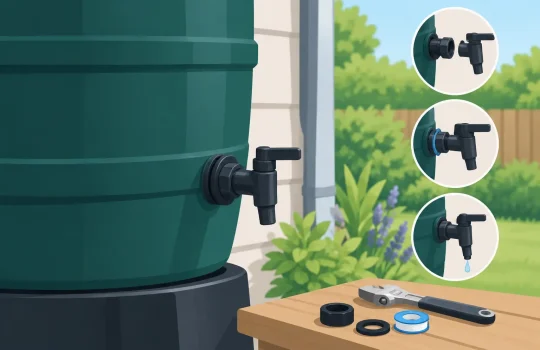
Threaded adaptors for taps, tanks and IBC outlets
Threaded adaptors make awkward systems workable. They bridge the gap between a tank outlet and a hose tail, a tap and a garden coupling, or an IBC valve and a more useful delivery setup. The trick is specifying the whole route from source to hose, rather than buying one adaptor at a time and hoping they meet in the middle.
Write down the outlet thread, the desired hose size and whether you need a shut-off valve, filter or nozzle between them. This simple check prevents the familiar collection of almost-right fittings in the workshop drawer.
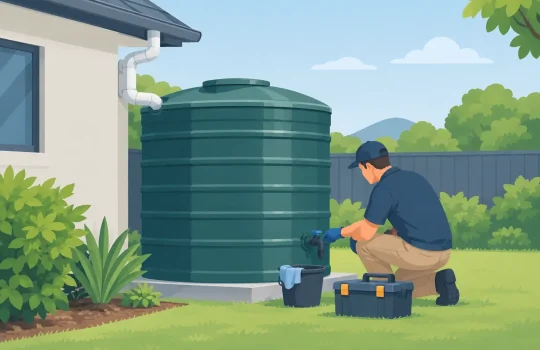
For rainwater harvesting, an outlet fitting may also need to work with a mesh filter. Keeping leaves, insects and larger debris out before they reach a pump or narrow hose can prevent blockages that look like connector problems but are actually contamination problems.
Choose materials for the liquid, not the label
Connector materials are not interchangeable. Brass is popular because it is durable and machine-friendly, but it is not the answer to every chemical or fuel application. Stainless steel offers excellent corrosion resistance in many environments but costs more. Polypropylene and other engineered plastics can be very useful for water, rainwater and suitable chemical applications, with the benefit of being light and resistant to rust.
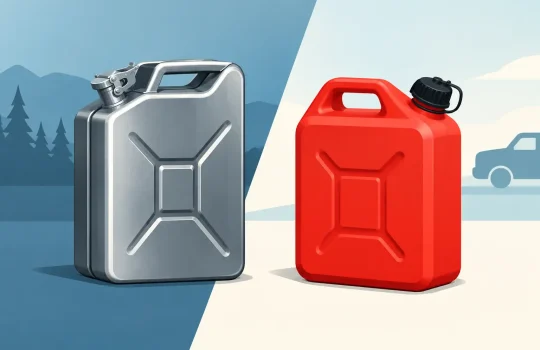
Fuel and biodiesel deserve extra care. Biodiesel can be particularly unforgiving of unsuitable rubbers, plastics and seal materials. A fitting might physically connect to the hose but still fail after exposure if the seals are not compatible. Check the full assembly: connector body, hose, gasket, O-ring, valve and any sealant used on threads.
For drinking water, use components intended for potable-water contact. For beer line and keg setups, hygiene matters as much as the mechanical fit. A connector that traps residue or is difficult to clean can spoil the result even if it never leaks.
Small installation details that prevent big leaks
Even the right connector can fail through rushed fitting. Cut hose ends squarely with a sharp blade or hose cutter. A ragged, angled end gives a poor sealing surface and makes clips harder to position. Inspect the hose for cracks, flattening and softness around old connections before reusing it.
Use the correct clamp for the job. Worm-drive clips are common and adjustable, but can damage softer hose if overtightened. Smooth-band clips spread the load more evenly and can be a better choice for delicate hose walls. On higher-pressure or vibration-prone systems, select clamps designed for that duty rather than relying on a single light clip.
After assembly, test with the intended liquid where safe to do so. Water is useful for checking many systems, but it does not always reveal fuel compatibility or real working conditions. Pressurise gradually, inspect every joint and tug the hose gently. A connection that leaks on the bench is inconvenient. One that lets go halfway through filling a container is expensive and messy.
When a connector is not the real problem
Repeated leaks often point to a wider setup issue. The hose may be too stiff for the bend required, leaving constant sideways load on the fitting. A heavy valve or nozzle may need support rather than hanging from a small plastic outlet. A pump may be producing more pressure than the hose, clamps or connector are rated to handle.
Likewise, poor flow can be caused by a blocked filter, undersized hose, a collapsed hose liner or an unvented container. Replacing the connector alone will not solve those problems. A Mad Approach to Practical Design means looking at the whole fluid path, then fixing the part that is actually causing the grief.
The best connector is usually the boring one you stop noticing: correctly sized, compatible with the liquid, easy to fit and still dry after real use. Get those basics right before buying extra adaptors, and your hoses will spend less time leaking and more time doing useful work.