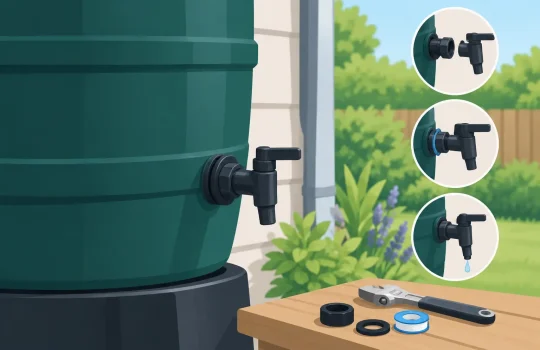
A rainwater tank usually goes wrong quietly. A gutter fills with leaves, a mesh filter clogs, the overflow backs up, and suddenly the water meant for the garden is brown, slow-moving or smelling less than fresh. This guide to rainwater tank maintenance focuses on the straightforward jobs that keep a harvesting system useful, clean and far less likely to cause a messy weekend repair.
For most domestic systems, the goal is not laboratory-pure water. It is dependable stored water for gardens, washing down hard surfaces, toilet flushing or other suitable non-drinking uses. Keeping it that way comes down to stopping debris early, checking the flow path regularly and cleaning the tank before sediment becomes a bigger job.
Start at the roof, not the tank
Your tank can only store the water it receives. If the roof and gutters are dirty, the tank becomes the final collection point for leaves, moss, grit, bird droppings and whatever else the weather has delivered. The most effective maintenance happens before that material reaches the inlet.
Check gutters at least twice a year, usually in spring and after the main autumn leaf fall. Homes beneath trees may need attention more often, particularly after high winds. Remove built-up leaves and check that gutter brackets still hold a proper fall towards the downpipe. Standing water in a gutter is a good sign that something is blocked, sagging or poorly aligned.
Look over the roof while you are there. Loose moss and crumbling mortar can create a surprising amount of fine sediment. You do not need to scrub a roof solely for the tank’s benefit, but knowing what is washing into the system helps you judge how often filters and the tank itself will need cleaning.
Keep screens and filters flowing
A leaf screen, downpipe filter or inlet mesh filter is one of the hardest-working parts of a rainwater system. It catches the material that would otherwise settle in the tank, clog a pump or block a watering-can tap. It also needs regular clearing, because a blocked filter can send water straight past the collection point or force it out where you do not want it.
During wet months, inspect accessible filters every few weeks. Lift off leaves, twigs and moss by hand, then rinse the mesh with a hose if needed. Do not use a high-pressure washer on fine mesh or plastic fittings unless the maker specifically says it is suitable. High pressure can distort the mesh, split housings and turn a simple clean into a replacement job.
Fine mesh gives better protection against small debris and insects, but it will need cleaning more often than a coarse guard. That is the trade-off. Choose the mesh size around the material falling on your roof, the tank’s intended use and how often you are willing to maintain it. For rainwater harvesting systems where keeping debris out matters, a purpose-built outlet or inlet mesh filter is a far better answer than trying to wedge improvised netting into a fitting.
Check the first-flush arrangement
The first water from a dry roof often carries the most dirt. A first-flush diverter allows that initial rinse to drain away before cleaner water enters the tank. If your system has one, check that it empties and resets correctly. A diverter left full of stagnant water can smell, attract insects and defeat the point of fitting it.
Not every small garden barrel has a first-flush unit, and not every setup needs one. It is especially worthwhile on larger roof-fed systems, tanks supplying pumps, or systems collecting water for toilet flushing. Where the water only feeds an ornamental border, clean gutters and a good inlet screen may be enough.
Inspect the tank every month in use
A quick monthly check prevents most avoidable problems. Walk around the tank and look for leaks at the tap, hose connector, overflow and inlet. Check that the base is level and firm. A full tank is extremely heavy, and a settling stand can strain fittings or cause a tank to lean.
Make sure the lid fits properly and any vents are screened. Light encourages algae, while open gaps invite insects, debris and small animals. Opaque tanks are generally easier to keep clean than clear or translucent ones. If sunlight reaches stored water, algae may develop even when the roof and filter are in good order.
Test the overflow by running a hose into the inlet or observing the tank during rain. Water should leave freely through the overflow and discharge away from walls, foundations and paths. An overflow that points back towards the house is not a tank feature – it is a damp problem waiting for a downpour.
If you use a pump, listen for changes in sound and watch for reduced flow. Poor pressure may be a pump issue, but it can also mean a blocked pre-filter, sediment around the intake or a kinked hose. Check the simple causes before assuming the pump has failed.
How to clean a rainwater tank properly
A full clean is usually an annual job, although the right interval depends on the roof, surrounding trees, filter quality and how much water you use. Tanks in open positions with effective pre-filtration can often go longer. Tanks fed from a mossy roof beneath overhanging trees may need cleaning sooner.
Plan the job for a dry spell, ideally when the tank is already low. Use the stored water on the garden first where appropriate rather than simply sending it to waste. Disconnect pumps or electrical equipment before working on filters, taps or pipework.
Drain the remaining water through the normal outlet if practical. Leave enough to loosen sediment, then use a wet vacuum or suitable pump to remove the dirty final layer. Wipe accessible internal surfaces with clean water and a soft brush. Avoid household detergents, bleach and strong chemicals unless you have a clear reason and know they are safe for the tank material and your intended water use. Chemical residue can harm plants and is particularly unsuitable where water may reach ponds or sensitive areas.
Rinse the tank, remove the rinse water, then refit the lid, screen, filter and connections. Clean or replace mesh that has become brittle, torn or permanently clogged. Before the next rainfall, confirm that water enters the tank rather than bypassing it.
Never climb into a rainwater tank. Even a tank that looks empty can present serious confined-space risks, including poor air quality, restricted movement and difficult rescue. If internal access is genuinely necessary, use a qualified professional with the correct safety procedures.
Deal with common warning signs early
Brown water after a heavy shower is not always a disaster. A sudden downpour can stir fine sediment or wash extra material from the roof. If it clears after the tank settles, inspect the inlet filter and guttering rather than rushing to empty the whole tank.
A persistent rotten-egg smell, however, suggests stagnant organic matter or poor circulation. Clean the pre-filter, check the first-flush system, inspect for trapped debris and consider a tank clean if the smell continues. Green water points towards light entering the tank, so focus on the lid, vents and any transparent sections.
Mosquitoes mean there is an opening somewhere. Check overflow outlets, vent holes, inlet gaps and damaged mesh. Fit suitable fine insect screening without choking the flow. Water backing out of the inlet during rain normally means a blocked filter, blocked downpipe or undersized overflow, and it needs sorting before the next storm.
Use stored rainwater sensibly
For most household rainwater systems, use the water for non-potable jobs unless the system has been designed, treated and managed specifically for drinking water. Rainwater is excellent for many garden tasks, but water quality changes with the roof, wildlife, storage conditions and maintenance standard.
Keep hose ends out of dirty ponds, buckets and compost areas so contamination cannot travel back towards the tank. If you connect rainwater to a pump or irrigation system, use fittings designed for the pressure and the job. A makeshift connection may hold on a calm day, then pop off when the pump starts and empty a tank where it is least useful.
A rainwater system should make daily jobs easier, not create another thing to worry about. Keep debris out at the roof, give filters a regular clean, check the overflow before bad weather and deal with sediment before it reaches the tap. A few practical checks now will keep the water flowing when the garden needs it most.